
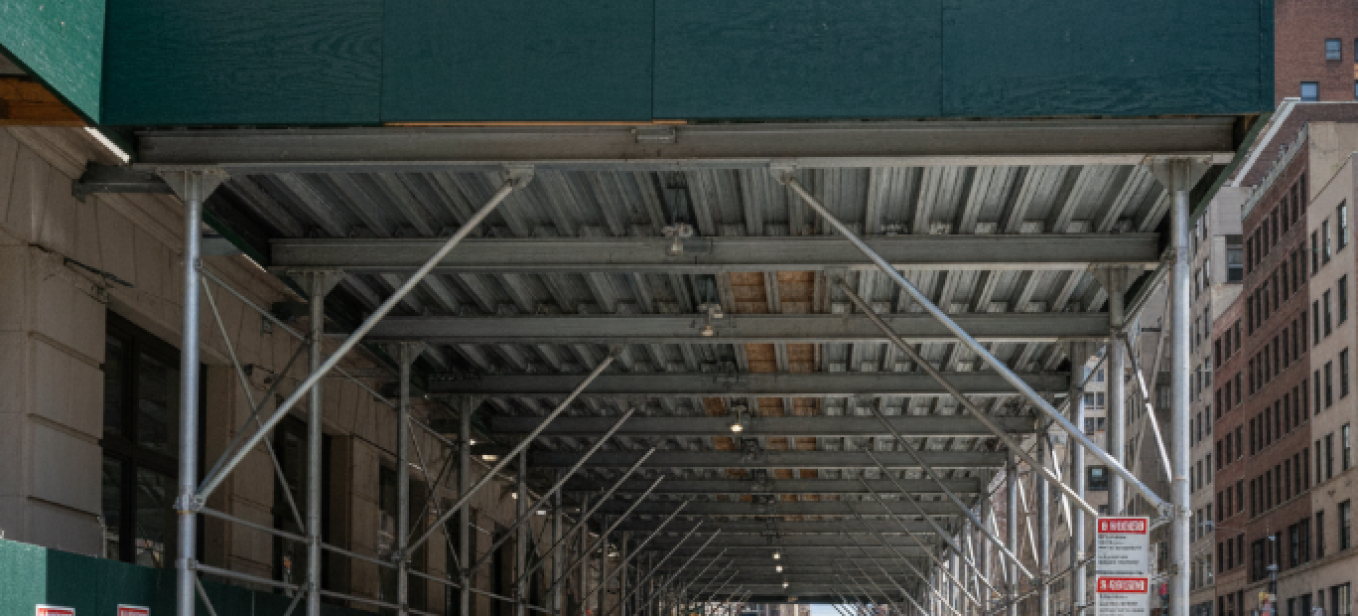
Sidewalk Shed Regulations Explained
- By: Nova Construction Team
- Published:
- Updated: March 11, 2026
Sidewalk sheds protect pedestrians from falling debris during construction and facade work. New York City maintains strict regulations governing these temporary structures. Property owners who fail to understand these requirements face violations, escalating fines, and potential liability. Recent legislative changes in 2025 have significantly altered sidewalk shed requirements, making compliance more complex than ever.
What Defines a Sidewalk Shed
A sidewalk shed creates a protective tunnel over the sidewalk when construction or demolition occurs above. These structures shield pedestrians from tools, materials, and building components that might fall from upper floors. Sidewalk sheds consist of a sturdy deck supported by vertical posts, with sidewalls and adequate lighting for safe passage.
The term sidewalk shed differs from scaffolding. Scaffolding provides access for workers to reach building surfaces. Sidewalk sheds protect the public at ground level. Many projects require both systems working together, scaffolding for access and sheds for pedestrian protection.
When NYC Requires a Sidewalk Shed
Property owners must install sidewalk sheds in specific circumstances. Buildings more than 40 feet high undergoing construction require protection below. Demolition of structures over 25 feet triggers the same requirement. The Department of Buildings also mandates sheds when facade conditions present danger to the public, even without active construction.
Local Law 11 repairs frequently require sidewalk shed installation. Buildings classified as unsafe must protect pedestrians immediately while repair work gets organized. SWARMP conditions may also necessitate protection depending on the deficiency severity and location.
Immediate threats to safety receive special treatment. Property owners may construct emergency sheds and file permit applications within 24 hours. This exception prevents delays when public safety demands instant action.
New Height Requirements Under Local Law 47
Local Law 47 of 2025 increased minimum sidewalk shed height from 8 feet to 12 feet, effective August 15, 2025. This change aims to improve pedestrian experience by reducing the claustrophobic tunnel effect of shorter sheds. The additional height creates a more open feeling for people walking beneath these structures.
Exceptions exist for specific situations. Where 12-foot height would block required light and air for building occupants, registered design professionals can authorize reduced height. The structure cannot drop below the old 8-foot minimum. Fire escapes and emergency exits must remain accessible, sometimes requiring height adjustments or deck modifications.
Lighting fixtures and certain bracing don’t count against the height measurement if they extend no more than 8 inches below the deck level. Bracing parallel or perpendicular to the sidewalk gets excluded from clear ceiling height calculations, provided it sits at least 8 feet above the walking surface.
Design and Construction Standards
Sidewalk sheds must meet specific engineering standards. The deck strength requirement is 300 pounds per square foot for most applications. Buildings under 100 feet high without storage needs can use 150 pounds per square foot. These load ratings ensure the structure handles expected loads plus a safety margin.
Width requirements depend on pedestrian traffic. Sheds must provide minimum 5-foot clear width, though actual width needs to accommodate expected foot traffic volume. Busy commercial streets require wider passages than residential side streets.
The shed must extend along the property line and 20 feet into adjacent properties for buildings over 100 feet tall. For buildings under 100 feet, it must extend 5 feet into adjacent properties. This coverage protects pedestrians from debris falling at an angle from upper floors.
For facade-only work on buildings without setbacks or projections above the second story, a new exception reduces required coverage. Areas more than 40 feet from the building along its length may not need shed protection, though the DOB can override this for sites presenting unique hazards.
Permit Duration and Renewal Changes
Local Law 48 of 2025 dramatically shortened sidewalk shed permits. Permits now last just 90 days instead of the previous one-year duration. This change addresses the chronic problem of sheds remaining in place long after work stops. Renewals require written reports from registered design professionals documenting recent work and explaining any delays.
Building owners cannot renew permits until all Department of Buildings penalties get paid. This enforcement mechanism prevents owners from ignoring violations while keeping sheds in place. The second permit renewal triggers new penalties that increase based on shed size and age. Extended timelines require compelling justification.
Sheds must come down within 90 days of completing facade repairs. Extensions demand special DOB requests with clear work schedules. The city’s “Get Sheds Down” initiative aims to reduce the 8,400-plus scaffolding structures currently occupying New York City sidewalks.
Color and Aesthetic Requirements
Sidewalk sheds no longer must be hunter green or institutional blue. Local Law 47 expanded acceptable colors to include white, as well as any solid color matching the building’s facade, trim, cornice, or visible roofing. This flexibility allows sheds to blend better with their surroundings, particularly important in historic districts and high-visibility locations.
Construction fences must match sidewalk shed colors for visual consistency. The expanded palette gives property owners options for creating less obtrusive temporary structures that complement rather than clash with neighborhood aesthetics.
Lighting Standards
Local Law 50 of 2025 upgraded illumination requirements for sidewalk sheds. LED lighting now mandates a minimum of 5 foot-candles measured at the sidewalk surface. This brightness ensures safe passage for pedestrians during evening and nighttime hours.
Light trespass protections prevent excessive glare from bothering building occupants. Fixtures within 20 feet of windows or glass doors must include adjustment or shielding to control brightness levels. Property owners upgrading existing sheds face additional costs but gain improved safety and neighborhood relations.
Inspection and Documentation Requirements
Daily inspections prove mandatory once sheds go up. The person responsible for the construction or maintenance project must inspect the structure each day. Structural stability and pedestrian safety get verified during these checks. Any damage or hazards discovered require immediate attention.
Documentation of daily inspections creates a compliance record. Inspection logs should include dates, times, and observations. This paperwork demonstrates due diligence if questions arise about shed maintenance.
Six-month comprehensive inspections provide deeper evaluation. These periodic assessments check for accumulated wear, structural degradation, and continued compliance with safety standards. Professional engineers or architects typically conduct these thorough reviews.
Common Violations and Penalties
Several violations occur frequently with sidewalk sheds. Failure to obtain permits before installation tops the list. Building owners sometimes erect sheds without proper DOB authorization, triggering immediate violations. Inadequate daily inspections and missing documentation create separate infractions.
Engineer or architect letters confirming compliance with safety standards must accompany permit applications. Missing this documentation results in violations. Unsafe or damaged sheds discovered during inspections generate additional penalties that accumulate until corrections occur.
Local Law 51 of 2025 added enforcement teeth for FISP-related timelines. Construction documents must reach DOB within 5 months of shed installation. Permit applications must file within 8 months. Repairs need completion within 2 years. Each missed deadline triggers violations ranging from $5,000 to $20,000. Extensions get granted only with advance requests and compelling documentation.
Coordinating with Construction Access
Sidewalk sheds work alongside other access systems during building projects. Suspended scaffolding and pipe scaffolding provide worker access while sheds protect pedestrians below. Coordinating these systems requires careful planning to ensure safety and efficiency.
Facade restoration work often demands extended shed periods. The new 90-day permit limits force building owners to plan projects more aggressively. Breaking large projects into phases with intermittent shed removal becomes one strategy for managing the tighter timelines.
How Nova Construction Can Help You
Navigating sidewalk shed regulations requires expertise in both construction and compliance. Nova Construction Services handles permit applications, engineering documentation, and shed installation under the updated 2025 requirements. The recent legislative changes caught many building owners unprepared for shortened timelines and new design standards.
The company coordinates shed installation with facade work to minimize permit renewals. Efficient project scheduling keeps work progressing and sheds come down faster. This approach reduces both costs and regulatory headaches for property owners.
Proper shed design prevents violations while meeting aesthetic goals under the expanded color palette. Engineering teams at Nova Construction prepare documentation that satisfies DOB requirements and streamlines approval processes. From initial permit through final removal inspection, comprehensive support keeps projects compliant.
Buildings approaching Local Law 11 inspection deadlines benefit from advance planning that integrates shed requirements with repair scheduling. This coordination prevents last-minute scrambles and expensive emergency installations.
Contact Nova Construction Services to discuss sidewalk shed planning for your upcoming facade project or building maintenance work.
Got a project in mind?
Let’s talk with Local Law 11 Experts about bringing your construction vision to life!
