
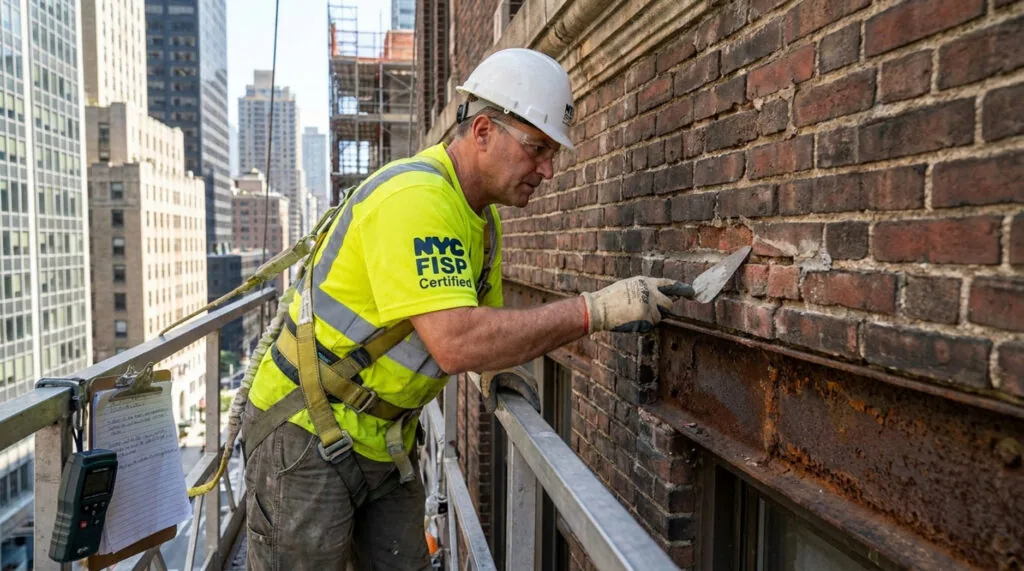
 A certified professional in a high-visibility NYC FISP shirt and safety harness performing masonry repair on a brick facade from a suspended platform.
Local Law 11 Deadlines and Penalties in NYC
Local Law 11 Deadlines and Penalties in NYC Keeping up with New York City building rules can feel confusing, and Local Law 11 (officially the Facade Inspection Safety Program, or FISP) is one of the biggest ones. If your building is over six stories, you must follow Local Law 11 deadlines. Missing these deadlines can lead to serious problems, including large fines that grow quickly, work delays, and major safety and legal risks. This article explains how FISP cycles work,
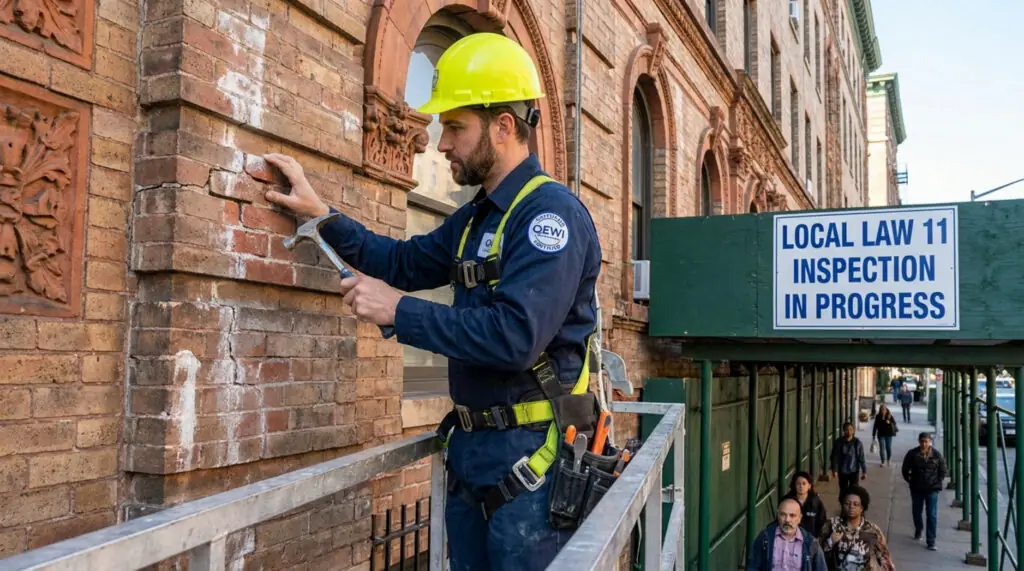 An inspector wearing a yellow hard hat and safety harness uses a hammer to examine a brick facade next to a sign reading "Local Law 11 Inspection In Progress."
Difference Between Local Law 11 and Local Law 97
Difference Between Local Law 11 and Local Law 97 New York City is known for tall buildings and busy streets. It also has strict rules to keep people safe and to cut pollution. Two laws that often confuse building owners are Local Law 11 (LL11) and Local Law 97 (LL97). Both affect many NYC buildings, but they focus on different problems. Local Law 11 is about public safety. It requires regular checks and repairs of building exteriors (façades) so pieces
 An aerial view of New York City skyscrapers, featuring One World Trade Center and the Empire State Building, with a magnifying glass icon labeled "SAFETY INSPECTION" focused on a building facade.
Local Law 11 Cycle Explained Step by Step
Local Law 11 Cycle Explained Step by Step New York City’s skyline is full of tall buildings, and keeping those buildings safe takes strict rules. One of the most important rules is Local Law 11, also called the Facade Inspection Safety Program (FISP). So, what does the Local Law 11 cycle look like, step by step? It is a repeating, five-year requirement for owners of buildings taller than six stories to have the building’s exterior walls and attached exterior parts
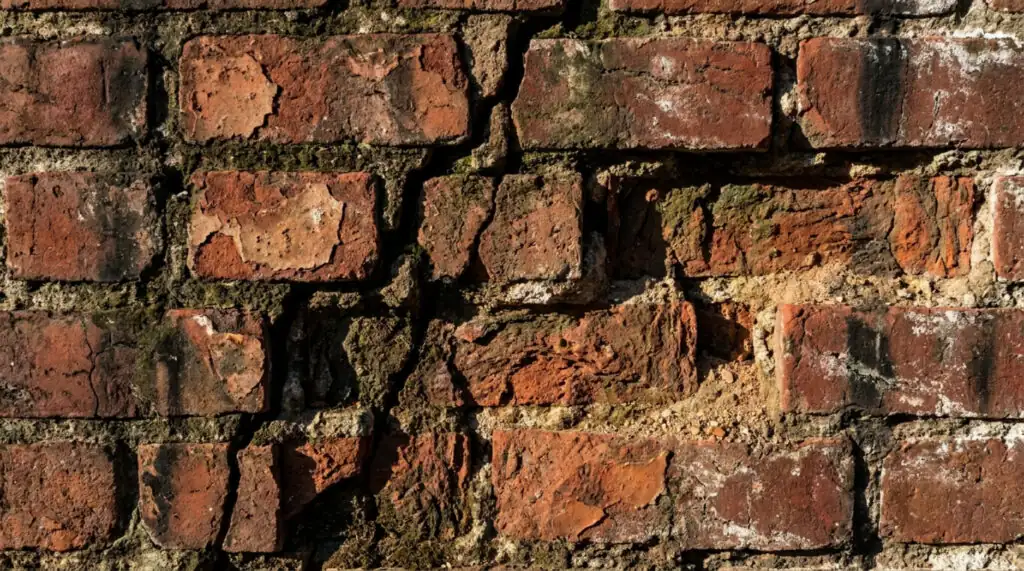 A close-up shot of a weathered red brick wall showing a significant vertical crack and crumbling mortar.
What Happens If Your Building Fails a Local Law 11 Inspection?
What Happens If Your Building Fails a Local Law 11 Inspection? Failing a Local Law 11 inspection in New York City is more than paperwork. It can lead to immediate safety steps, serious legal and money penalties, and required repairs that can be expensive. If a licensed professional rates a building’s exterior as “Unsafe” under this program, the owner must act fast to fix dangerous conditions, prevent accidents, and meet Department of Buildings (DOB) rules. Moving ahead usually means quick
 A busy New York City street view featuring historic brick buildings with fire escapes, a blue construction scaffold over the sidewalk, and modern glass skyscrapers.
What Is Local Law 11 and Who Is Responsible for Compliance?
What Is Local Law 11 and Who Is Responsible for Compliance? New York City has many tall buildings, from skyscrapers to older apartment buildings. Keeping people safe on the sidewalk is a big priority. That is where Local Law 11 comes in. Local Law 11 is a New York City rule that requires regular inspections of building facades (the outside walls). The goal is to help prevent pieces of a building from falling and to keep exterior walls in safe
 Flat commercial rooftop with a pyramid skylight, vent pipe, and chimney structures under a cloudy sky.
How to Repair or Replace Your Skylight
How to Repair or Replace Your Skylight Skylights bring natural light and architectural appeal to any building, but like all roofing components, they have a finite service life. Issues such as leaks, condensation, cracked glazing, or outdated units require timely attention from qualified professionals to prevent costly water damage and maintain building envelope integrity. This guide outlines how to identify common skylight problems and understand the repair and skylight replacement process. Due to the complexity of skylight systems and their
 Historic stone church facade with tall columns and steeple surrounded by modern high-rise buildings.
Structural Repairs: Everything You Need to Know
Structural Repairs: Everything You Need to Know Structural repairs are key to keeping buildings safe, sturdy, and valuable. When the basic parts of a structure — like the foundation, beams, and exterior framing — show distress through cracks, sagging, or shifting, it’s a clear sign that something serious needs fixing. These repairs go beyond simple cosmetic issues; they tackle problems that help maintain the structural integrity of buildings and ensure safety and stability. Ignoring these issues can compromise the structure
 Collage featuring ornate terracotta architecture, clay roof tiles on Mediterranean-style buildings, and terracotta planters with green herbs.
Repairing Terra Cotta Surfaces
Repairing Terra Cotta Surfaces Terra cotta is a longstanding building material, prized for its warm colors and strong nature. This fired clay element has gained popularity for its aesthetic appeal and characteristic durability. Used for thousands of years — from ancient Harappan settlements to the decorative facades of 19th and 20th-century buildings — this “baked earth” remains a popular choice in architectural design. Still, terra cotta can wear out over time because of weather and other forces. The restoration process
