
Local Law 11 Deadlines and Penalties in NYC
- By: Nova Construction Team
- Published:
- Updated: September 30, 2026
Keeping up with New York City building rules can feel confusing, and Local Law 11 (officially the Facade Inspection Safety Program, or FISP) is one of the biggest ones.
If your building is over six stories, you must follow Local Law 11 deadlines. Missing these deadlines can lead to serious problems, including large fines that grow quickly, work delays, and major safety and legal risks.
This article explains how FISP cycles work, what happens if you do not comply, and what you can do to stay on track.
Local Law 11 Inspection Cycles and Key Deadlines
Local Law 11 helps protect the public by requiring regular facade inspections. This is not a one-time job. It repeats on a set schedule, and building owners need to plan ahead.
Understanding FISP Inspection Cycles
The Facade Inspection Safety Program (FISP), often called Local Law 11/98, requires owners of buildings taller than six stories to have exterior walls and related parts inspected every five years by a Qualified Exterior Wall Inspector (QEWI).
The main purpose is to find and fix unsafe conditions that could put pedestrians, residents, or the building at risk.
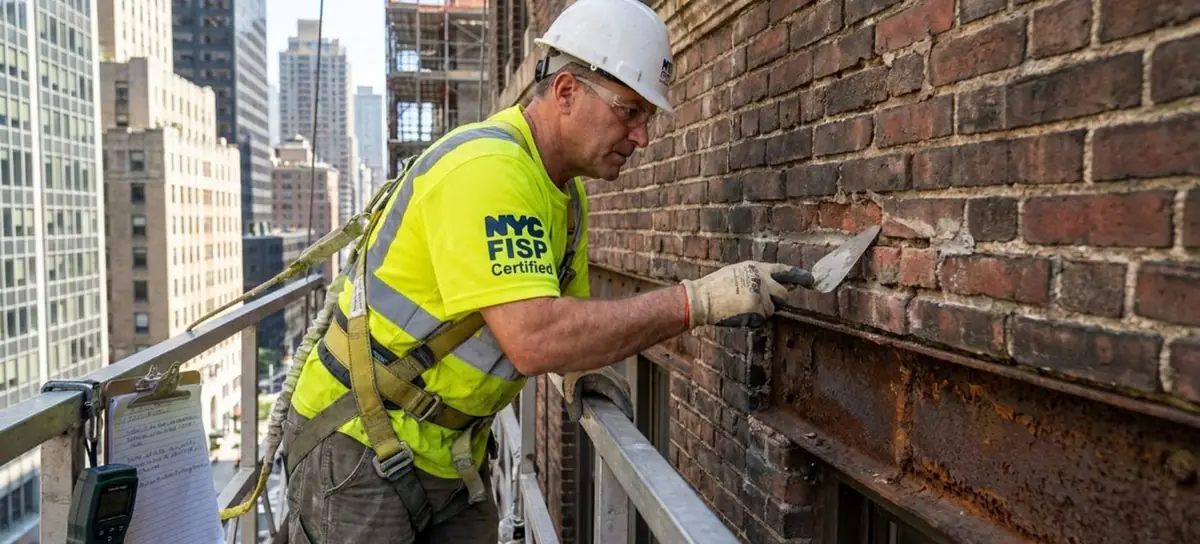
These inspections are detailed and often need scaffolding or other access equipment so the inspector can closely examine the facade.
After the inspection, the QEWI files a report with the NYC Department of Buildings (DOB). The report rates the facade as:
- Safe (S)
- Safe with Repair and Maintenance (SWRM)
- Unsafe (U)
Each rating comes with its own follow-up steps and deadlines.
Deadlines for Cycle 10 and Sub-Cycles
For Cycle 10, which started on February 21, 2025 and runs through February 21, 2030.
To spread out the workload, the DOB splits buildings into three sub-cycles (A, B, and C) based on the last digit of the building’s block number.
Each sub-cycle gets a two-year filing window inside the five-year cycle:
- Sub-cycle 10A: Block numbers ending in 4, 5, 6, 9. Filing window: February 21, 2025 to February 21, 2027.
- Sub-cycle 10B: Block numbers ending in 0, 7, 8. Filing window: February 21, 2026 to February 21, 2028.
- Sub-cycle 10C: Block numbers ending in 1, 2, 3. Filing window: February 21, 2027 to February 21, 2029.
How to Determine Your Building’s Compliance Window
To find your filing window, start with your building’s block number. You can find it on property records, tax bills, or through the NYC Department of Finance online property search.
Once you have the block number, look at the last digit. That digit sets your sub-cycle:
- Sub-cycle A: Block numbers ending in 4, 5, 6, 9.
- Sub-cycle B: Block numbers ending in 0, 7, 8.
- Sub-cycle C: Block numbers ending in 1, 2, 3.
After you know your sub-cycle, you can match it to the correct two-year filing window for the current (or next) cycle.
It’s smart to speak with a QEWI to confirm your dates and requirements based on current DOB rules and your building’s specific situation.
Penalties for Missing Local Law 11 Deadlines
The NYC Department of Buildings treats Local Law 11 compliance very seriously. Penalties are high because facade problems can lead to injuries and other serious harm.
1. Financial Penalties: Fines and Compounding Fees
The most direct result of missing a Local Law 11 deadline is a major fine.
If you do not file the required FISP report on time, the DOB can issue an initial penalty of $5,000. If the report stays unfiled, the DOB adds $1,000 per month for every month the filing is late.
These monthly penalties can add up fast.

If your inspection finds an Unsafe (U) condition and you do not fix it within the required time (often 90 days, with extensions allowed in certain cases), penalties increase. You may face:
- $1,000 per month for failing to correct the unsafe condition, and
- An extra penalty of either $10 per linear foot of affected facade or $1,000 per balcony, whichever is higher
These charges continue until the condition is fixed and an acceptable amended report is filed. In many cases, the cost of fines can become much higher than the cost of doing the work on time.
2. Operational Risks: Stop-Work Orders and Insurance Impacts
Missing deadlines can also create major day-to-day problems. If unsafe conditions are not handled quickly, the DOB can issue a Stop-Work Order (SWO). This can stop exterior construction, repairs, renovations, or even regular maintenance. That can disrupt building operations, frustrate tenants, and lead to disputes.
Non-compliance can also affect insurance. Insurance companies often review a building’s FISP history. If a building has open violations or a record of ignoring unsafe conditions, it may face higher premiums, trouble renewing coverage, or denial of claims tied to facade issues.
It can also hurt the owner’s or manager’s reputation and may impact property value and tenant confidence.
3. Additional Risks for Buildings With Unsafe Conditions
The biggest risk is public safety. Pieces of a failing facade can fall and seriously injure or kill someone. This can lead to lawsuits and, in extreme cases, criminal charges if there is clear negligence.
If the DOB believes the danger is immediate, it may order emergency repairs and charge the owner. The city can place a lien on the property to recover costs. This increases expenses and also means the owner has less control over how and when repairs are done.
How to Avoid Local Law 11 Penalties in NYC
Planning ahead and following through are the best ways to avoid Local Law 11 penalties. It mainly comes down to acting early and keeping clear records.
Timely Scheduling of Inspections and Repairs
The best rule for Local Law 11 is: do not wait. Hire a QEWI well before your filing deadline. A proper inspection takes time, and the QEWI needs time to write and submit the report.
If the inspection finds Unsafe (U) conditions, you need to act right away. These issues usually must be repaired within 90 days of the filing date, and an amended report must be filed with the DOB.
Even SWRM conditions, while not an immediate danger, still need to be fixed by set deadlines (often within the same five-year cycle).
It also helps to plan for costs. Facade work can be expensive, especially when scaffolding and specialized contractors are needed.
Setting aside funds or arranging financing ahead of time helps you start repairs quickly and avoid violations and fines. A good maintenance plan is better than rushing only when a deadline is close.
Best Practices for Documentation and Filing
Good paperwork matters. Keep records for each step of the FISP process, from hiring your QEWI to filing the final report.
Your QEWI must submit the report correctly and on time through the DOB NOW: Safety portal, which is the official system for FISP filings.
Keep both digital and printed copies of:
- Submitted reports and DOB confirmations
- Photos of existing conditions
- Repair contracts and invoices
- Permits and sign-offs
If your building is marked Unsafe or SWRM, document repairs clearly with before-and-after photos and contractor records. When you file an amended report, add the supporting documents.
Got a project in mind?
Let’s talk with Local Law 11 Experts about bringing your construction vision to life!
