
Local Law 11 Cycle Explained Step by Step
- By: Nova Construction Team
- Published:
- Updated: September 30, 2026
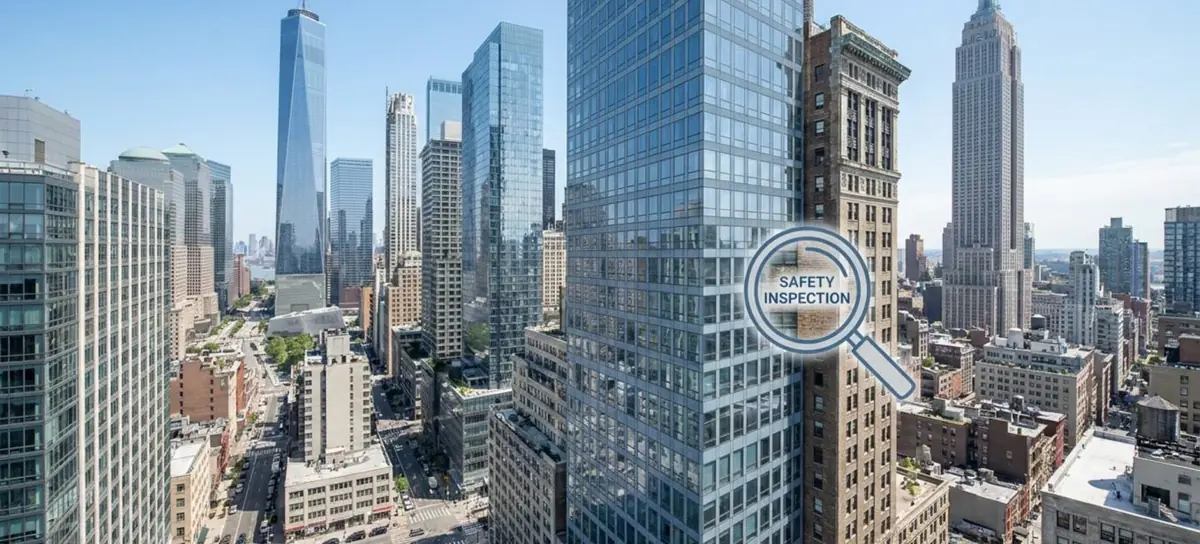
New York City’s skyline is full of tall buildings, and keeping those buildings safe takes strict rules. One of the most important rules is Local Law 11, also called the Facade Inspection Safety Program (FISP).
So, what does the Local Law 11 cycle look like, step by step? It is a repeating, five-year requirement for owners of buildings taller than six stories to have the building’s exterior walls and attached exterior parts inspected closely by a Qualified Exterior Wall Inspector (QEWI), and then file a detailed report with the NYC Department of Buildings (DOB).
This article breaks the process into clear steps so you can understand what happens in each part of the cycle, stay compliant, and help keep the public safe.
What Is Local Law 11 and Why Was It Introduced?
Local Law 11, officially called the Facade Inspection Safety Program (FISP), is a safety law created after serious accidents.
It started after a fatal event in 1968, when falling masonry caused a death. That incident pushed the city to create Local Law 10 in 1980, which required regular facade inspections for certain buildings.
Later, another death in 1998 from falling facade material showed the city needed tighter rules. That led to Local Law 11 of 1998, which expanded what buildings had to do and how often inspections had to happen.
The main goal is simple: protect people by finding and fixing dangerous exterior conditions before something falls and hurts someone.
In 2010, the city renamed the program the Facade Inspection Safety Program (FISP), a clearer name that highlights the program’s safety focus.
Purpose of Local Law 11 (FISP)
Local Law 11 (FISP) is meant to prevent problems instead of reacting after an accident. It requires building owners to check their facades regularly so damage does not grow into a dangerous condition. This regular attention helps protect pedestrians and also supports the long-term health of the building.
The program also supports long-term care of NYC’s building stock. Regular inspections and repairs can help buildings last longer and reduce the chance of much bigger, more expensive repairs later. It also helps protect property value.
Which Buildings Must Comply?
Local Law 11 applies to New York City buildings that are taller than six stories. This count can include basements if they add to the height above grade.
Many people assume it only applies to residential buildings, but that is not true. Commercial, institutional, and mixed-use buildings that meet the height requirement must also comply.
There are exceptions. Most one- and two-family homes are exempt, and some specific industrial structures may also be exempt if they do not create the same public safety risk. Owners should confirm their building’s status with the NYC DOB or a qualified professional so they know exactly what is required.
What Does the Local Law 11 Cycle Mean?
The “cycle” part is key. Local Law 11 is not a one-time task. It repeats on a schedule so building exteriors are checked over and over, year after year. For building owners, this means compliance is ongoing.
Each cycle is a set time period where inspections and filings must be completed. If an owner misses their cycle or does not handle required repairs on time, the penalties can be serious. That is why staying organized and planning ahead matters.
Local Law 11 Cycle Explained
The Local Law 11 cycle is a five-year period when a building must be inspected and a report must be filed with the DOB. The cycles are staggered, so not every building is due at once. This spreads out the work for QEWIs and the DOB and keeps the system moving steadily.
The program is currently in Cycle 10, which started on February 21, 2025. Each cycle should build on the last one, so buildings ideally improve over time as owners fix issues and follow a maintenance plan.
Cycle Length, Sub-Cycles, and Key Deadlines
Each cycle lasts five years. To manage the number of buildings, the DOB splits each cycle into three sub-cycles: A, B, and C.
A building’s sub-cycle is based on the last digit of its block number from the NYC tax map. This spreads deadlines across the full cycle.
For Cycle 11, the deadlines are:
- Cycle 11A: Buildings with block numbers ending in 4, 5, 6, or 9. Filing window: February 21, 2025, to February 21, 2026.
- Cycle 11B: Buildings with block numbers ending in 0, 7, or 8. Filing window: February 21, 2026, to February 21, 2027.
- Cycle 11C: Buildings with block numbers ending in 1, 2, or 3. Filing window: February 21, 2027, to February 21, 2028.
Owners should figure out their sub-cycle early so they do not get hit with late filing penalties, which can add up quickly. There may be a grace period in some cases, but the safest approach is to file within the correct window.

Step-by-Step Guide to the Local Law 11 Cycle
The Local Law 11 cycle can feel overwhelming at first, but it becomes much clearer when you break it into steps. From confirming your building is covered by the law to completing repairs, each stage follows DOB rules.
This step-by-step approach helps owners meet requirements and also makes the process easier to plan and manage. Here are the main steps.
Step 1: Determine Building Compliance and Sub-Cycle
The first step is to confirm your building is required to comply. The main question is whether the building is taller than six stories. If it is, the next step is to find your sub-cycle (A, B, or C) by using the last digit of your tax block number.
Your sub-cycle tells you your filing window for the current five-year cycle. If you identify this early, you can plan ahead for scheduling, budgeting, and hiring the right professional, instead of rushing near the deadline.
Step 2: Hire a Qualified Exterior Wall Inspector (QEWI)
Local Law 11 inspections must be done by a Qualified Exterior Wall Inspector (QEWI). A QEWI must be a New York State-licensed Professional Engineer (PE) or Registered Architect (RA) and must have at least one year of experience with facade inspections.
Picking a QEWI with strong experience matters. They do more than just inspect-they also explain the results, point out priorities, and suggest what repairs are needed. A good QEWI helps you follow DOB rules and avoid mistakes.
Step 3: Pre-Inspection Preparation for Building Owners
Before the QEWI arrives, owners should prepare. Gather past FISP reports, records of old facade repairs, and original construction documents or plans if you have them. This background helps the inspector understand what issues have happened before and what work has already been done.
Owners also need to provide safe access to areas the QEWI must inspect, such as the roof and setbacks. This can mean clearing pathways, arranging keys, and coordinating with building staff.
You may also need to inform tenants if the inspection requires access to balconies or certain interior areas for checking exterior attachments.
Step 4: Conducting the Critical Façade Examination
This is the main inspection work. The QEWI uses visual checks and hands-on methods. They look from the ground, from accessible setbacks, and from balconies for cracking, spalling, rust, missing mortar, movement, or other damage.
Local Law 11 also requires hands-on inspection of at least one interval per street frontage. This usually requires scaffolding, suspended platforms (like swing stages), or industrial rope access.
Drones can sometimes help collect visual information if the DOB allows it and licensed operators are used, but hands-on inspection is still required for key areas.
Step 5: Classifying Façade Conditions – Safe, SWARMP, or Unsafe
After the inspection, the QEWI assigns one of three ratings to the facade and its attached parts: Safe, Safe With a Repair and Maintenance Program (SWARMP), or Unsafe. This rating is the main result of the FISP report and decides what the owner must do next.
The QEWI’s judgment matters a lot here, because the rating drives the repair timeline and the safety steps required. This is where inspection results become clear action items.
Step 6: Filing the FISP Report With the NYC Department of Buildings
After the inspection and classification, the QEWI writes the technical report (the FISP 1 report). It documents the conditions found, the ratings, and the recommended repairs or maintenance plan. The QEWI files it electronically through the DOB NOW: Safety portal.
Owners also have a responsibility here: after the QEWI submits the report, the owner must confirm it electronically. Filing within your sub-cycle deadline is required if you want to avoid penalties.
Step 7: Completing Required Repairs Within Specified Timelines
The last step is completing required repairs. If the report lists an “Unsafe” condition, the owner must put public protection in place right away (for example, a sidewalk shed or netting) and complete repairs within 90 days of filing. Extensions may be possible, but they require a reason and DOB approval.
For “SWARMP” conditions, the owner must follow the repair and maintenance program and complete the work before the filing deadline of the next five-year cycle. After unsafe work is fixed, the QEWI must file an amended report (FISP 2) showing repairs are complete and updating the rating to Safe or SWARMP.
Classification of Facade Conditions in FISP Reports
The QEWI must rate the facade and appurtenances based on DOB definitions. This rating is not a casual opinion-it controls what the owner must do and when they must do it. There are three ratings:
Safe Condition
A “Safe” rating means the QEWI did not find any conditions that threaten public safety at the time of inspection. This is the best result and means the building does not need immediate DOB-required work.
Even with a Safe rating, owners should keep up regular maintenance. Weather and time can create new damage, and small issues can grow. A Safe report means no immediate DOB action is required, but routine care is still smart.
Safe With a Repair and Maintenance Program (SWARMP)
A “Safe With a Repair and Maintenance Program” (SWARMP) rating is used when issues are present but are not an immediate hazard. If ignored, these issues could get worse and become unsafe. SWARMP conditions are often minor to moderate problems that need planned repairs.
With SWARMP, the QEWI describes a repair and maintenance program the owner must follow. The listed repairs must be completed before the filing deadline of the next five-year cycle. This rating helps owners fix problems early, before they turn into more dangerous and expensive repairs.
Unsafe Condition
An “Unsafe” rating means the QEWI found conditions that create an immediate risk to the public. Examples can include loose masonry, major cracking, or failing attachments that could fall.
If a building is rated Unsafe, the owner must act right away. Public protection like sidewalk sheds, netting, or fencing must be installed, and repairs must be completed within 90 days of filing the report. After the work is done, the QEWI must file an amended report (FISP 2) confirming the hazard is fixed and updating the rating to Safe or SWARMP.

What Happens After the FISP Report is Filed?
Filing the report is an important step, but it is often not the final step. What comes next depends on whether the building is rated Safe, SWARMP, or Unsafe. DOB rules require owners to act on SWARMP and Unsafe findings so issues are fixed, not just recorded.
Good follow-up also means keeping strong records and maintaining the facade over time so future cycles are easier and safer.
Timelines for Addressing SWARMP and Unsafe Findings
For “Unsafe” conditions, owners generally have 90 days to complete repairs and file an amended report (FISP 2). This short deadline reflects the level of danger. Extensions can be requested, but they require a strong reason and a clear plan to complete the work quickly.
For “SWARMP” conditions, owners have more time, but the deadline still matters. SWARMP repairs must be completed by the filing deadline of the next five-year cycle. Owners should still monitor these issues, because conditions can worsen before the next cycle if left alone.
Requirements for Amended Reports
When an Unsafe condition is repaired, the QEWI must file a FISP 2 report to show the work is done and the condition is now Safe or SWARMP. If this report is not filed on time, penalties may apply even if the repairs were completed.
For SWARMP work, once all repairs listed in the program are finished before the next cycle deadline, the QEWI should file a FISP 3 report. This keeps DOB records updated and shows the building stayed in compliance.
Best Practices for Record-Keeping and Maintenance
Keeping good records makes future cycles easier. Owners should keep copies of all FISP reports, QEWI notes, repair invoices, contractor details, and photos taken before, during, and after work. These records help future inspectors, show a history of compliance, and can be important if there is ever a claim or dispute.
Owners should also keep a regular facade maintenance plan, even for buildings rated Safe. Simple steps-like routine visual checks by staff and fixing small cracks or water problems early-can prevent expensive emergency repairs and reduce the chance of an Unsafe rating in the next cycle.
Penalties and Risks of Not Complying With Local Law 11
Failing to comply with Local Law 11 is not just a paperwork issue. The consequences can include large fines and serious legal exposure. The DOB enforces these rules because public safety is at stake.
Ignoring FISP requirements can also hurt a building’s finances in other ways, including insurance problems and lower property value.
Types of Fines and Violations
Penalties are set up to discourage owners from delaying. If a required FISP report is not filed during the correct sub-cycle window, owners can face monthly penalties that continue until the report is filed. Late filing can also lead to daily fines, which can grow fast.
Penalties are even worse when Unsafe conditions are not fixed on time. If repairs and the amended report are not completed within the 90-day window, daily fines can apply.
In extreme situations, the DOB can arrange for needed work and bill the owner, and may place a lien on the property to collect costs. If negligence leads to someone being hurt or killed, owners and managers may also face criminal charges.
Impact on Building Insurance and Value
Non-compliance can also affect insurance. Insurers may see open facade hazards and violations as high risk. That can mean higher premiums, difficulty getting coverage, or cancellation of a policy, which leaves the owner exposed if something goes wrong.
Property value can drop as well. Buyers and lenders often avoid buildings with open Local Law 11 violations or major SWARMP/Unsafe items because repairs can be expensive. A clean compliance record can make a building easier to sell or refinance and can support a stronger value in the NYC market.
How to Stay Ahead of Local Law 11 Requirements
Because Local Law 11 is strict and the penalties are serious, planning ahead is necessary. Owners who treat FISP as part of normal building management are usually better prepared and spend less over time.
Staying ahead means treating facade care as routine work, not an emergency project every five years.
Preparing for Upcoming Cycles
The simplest way to manage Local Law 11 is to avoid rushing near the deadline. Owners should find their next filing window early-ideally years in advance. This helps with budgeting for the QEWI inspection and for any repairs that may be needed. Facade work can be expensive, especially if it requires scaffolding or specialized crews.
Hiring a QEWI early can also help with scheduling and may reduce stress during busy deadline periods. It may also allow time to address small issues before the formal inspection, which could reduce the chance of SWARMP or Unsafe results.
Proactive Maintenance Strategies
The best long-term approach is ongoing maintenance. This means building staff regularly look for early warning signs like small cracks, loose mortar, staining, or water leaks.
Fixing small problems quickly can stop them from turning into SWARMP or Unsafe conditions later. A long-term plan that includes cleaning, repointing, and sealing can protect the exterior. Some owners also schedule voluntary inspections between official cycles to find problems early and plan repairs with fewer surprises.
Frequently Asked Questions about the Local Law 11 Cycle
Even after learning the basics, building owners and managers often have repeat questions. Answering these can make the process easier to understand and manage. Below are common questions with clear, practical answers.How are sub-cycle dates determined?
Sub-cycle dates are based on the last digit of a building’s tax block number shown on the NYC tax map. This spreads filings across the five-year cycle. For Cycle 10 (February 21, 2025, to February 21, 2030), the breakdown is:- Cycle 11A: Block numbers ending in 4, 5, 6, 9 (Filing window: Feb 21, 2025 – Feb 21, 2026)
- Cycle 11B: Block numbers ending in 0, 7, 8 (Filing window: Feb 21, 2026 – Feb 21, 2027)
- Cycle 11C: Block numbers ending in 1, 2, 3 (Filing window: Feb 21, 2027 – Feb 21, 2028)
What qualifications must a QEWI have?
A QEWI must be a New York State-licensed Professional Engineer (PE) or Registered Architect (RA) and must have at least one year of facade inspection experience. This rule is meant to make sure the inspector has the right training and real field experience for complex building exteriors. The QEWI should also remain independent from contractors who may do the repair work so the inspection stays fair and objective.Can interim inspections be beneficial?
Yes. Interim inspections are not required, but they can help a lot. A check between five-year cycles can find small issues early, which often means cheaper repairs and fewer surprises during the official inspection. Interim checks also help owners budget over time and reduce the risk of emergency work and fines tied to serious facade problems.What should be included in preparation checklists?
A good preparation checklist should cover:- Past FISP reports, drawings (if available), and records of earlier facade repairs
- Safe access to inspection areas (roof, setbacks, and spots needing close-up access)
- Tenant notices if balconies or certain interior areas must be accessed
- A budget for the inspection and possible repair work
Got a project in mind?
Let’s talk with Local Law 11 Experts about bringing your construction vision to life!
