
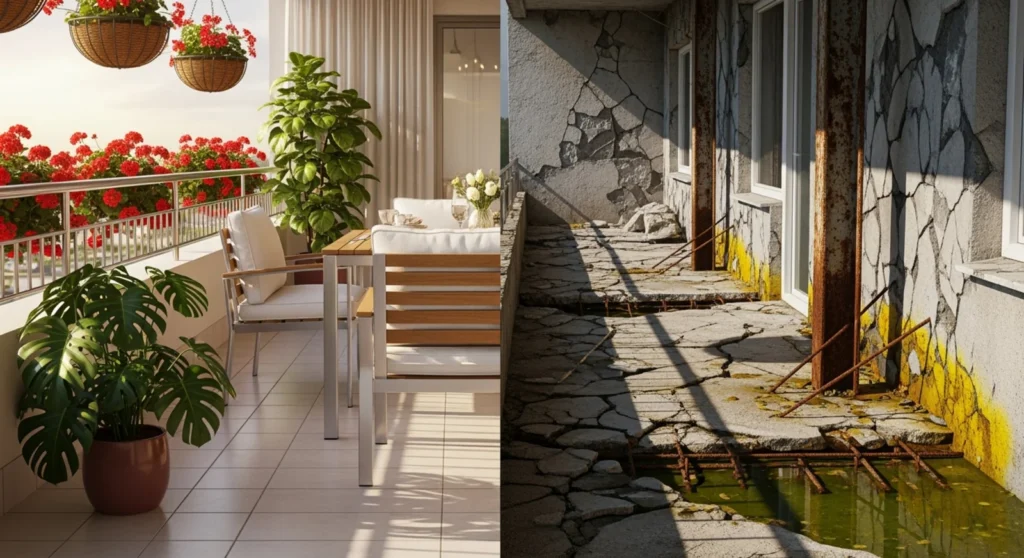
 Side-by-side comparison of a clean, modern balcony and a damaged exterior walkway with cracks, water damage, and structural deterioration.
The Best Options for Waterproofing a Balcony or Terrace
The Best Options for Waterproofing a Balcony or Terrace Balcony waterproofing is more than just keeping the area dry — it’s essential for protecting your building’s structure, looks, and value over time. Since balcony decks and terraces face constant exposure to rain, sun, snow, and changing temperatures, they are at high risk of water damage. If water gets below the surface, it can cause serious repair costs, health problems, and drop the value of your property. This comprehensive guide provides
 Modern building facade showing glass panels, red brick, horizontal wood cladding, and light stone tiles.
The Importance of Building Facade Maintenance and Upkeep
The Importance of Building Facade Maintenance and Upkeep Maintaining and taking care of a building’s facade is important for many reasons. It affects not only how a building looks but also its overall safety and how long it will last. The facade is the building’s first protection against weather and outside conditions. If you ignore this part of a building, it can lead to expensive repairs, lower property value, and even possible legal problems. Taking care of the facade through
 Modern eco-friendly building with vertical garden facade and scaffolding during maintenance work
Sustainability and the Environmental Impact of Local Law 11
Sustainability and the Environmental Impact of Local Law 11 New York City’s Facade Inspection and Safety Program—mandated by Local Law 11—serves an obvious purpose: preventing facade failures that endanger pedestrians. Less recognized but equally significant, the law promotes environmental sustainability by encouraging preventive maintenance, extending building lifecycles, and reducing construction waste. Building owners focused on sustainability goals can leverage Local Law 11 inspections as a framework for environmentally responsible facade management. The every five years inspection cycle creates opportunities to
 Maintenance workers on a suspended platform performing facade work on a multi-story building
Local Law 11 and Its Impact on Property Values
Local Law 11 and Its Impact on Property Values New York City’s Local Law 11 requires building owners to conduct facade inspections every five years for structures over six stories. While primarily a safety mandate, Local Law 11 compliance directly affects property values through maintenance costs, marketability, tenant satisfaction, and investor confidence. Building owners who understand these financial implications can make strategic decisions that protect and enhance their real estate investments. The Facade Inspection Safety Program—commonly called FISP—creates ongoing obligations
 Industrial welder wearing protective gear welding a metal component in a workshop
How to Weld Cast Iron | Cast Iron Crack Repair
How to Weld Cast Iron | Cast Iron Crack Repair Cast iron architectural elements—cornices, railings, structural columns, and decorative facades—require specialized repair techniques when cracks develop or sections fail. Unlike steel or aluminum, cast iron presents unique welding challenges due to its carbon content, brittleness, and tendency to crack when heated and cooled improperly. Building owners dealing with damaged cast iron must understand repair options to make informed decisions about restoration approaches. Historic buildings throughout urban centers contain cast iron
 Construction workers performing interior structural demolition inside an old industrial building
What is Structural Shoring and Why is it Important to Selective Demolition
What is Structural Shoring and Why is it Important to Selective Demolition Selective demolition projects require removing specific building sections while keeping adjacent structures intact and stable. Structural shoring systems make this possible by providing temporary support that prevents collapse during controlled deconstruction. Without proper shoring, even minor demolition work can compromise building integrity and create dangerous conditions for workers and neighboring properties. Building owners undertaking partial demolitions, renovations involving load-bearing wall removal, or excavation near existing foundations must understand
 Workers cleaning windows on a suspended platform on a high-rise glass building above a busy city street
Types of Scaffolding – Suspended Scaffolds
Types of Scaffolding – Suspended Scaffolds When building owners need to maintain, repair, or inspect exterior facades on mid-rise and high-rise structures, suspended scaffold systems provide access where traditional ground-supported scaffolding can’t reach. These specialized platforms suspend from overhead structures, allowing workers to perform tasks at various heights without occupying ground-level space—a critical advantage in dense urban environments. What Makes Suspended Scaffolding Different Unlike conventional scaffold types that build upward from the ground, suspended scaffolds hang from roofs, parapets, or
 Construction workers assembling metal scaffolding on a building site in an urban area
Assemble Scaffolding: Step-by-Step Guide & Tips
Assemble Scaffolding: Step-by-Step Guide & Tips Construction and maintenance projects depend on properly assembled scaffolding to provide safe working platforms at height. Mistakes during assembly create serious hazards for workers and passersby. Scaffolding assembly requires attention to detail, knowledge of component types, and strict adherence to safety procedures. Whether erecting a simple scaffold tower or complex suspended systems, following proven assembly methods ensures structural stability and worker protection. Please note that this article is for informational purposes only. Scaffolding assembly
