
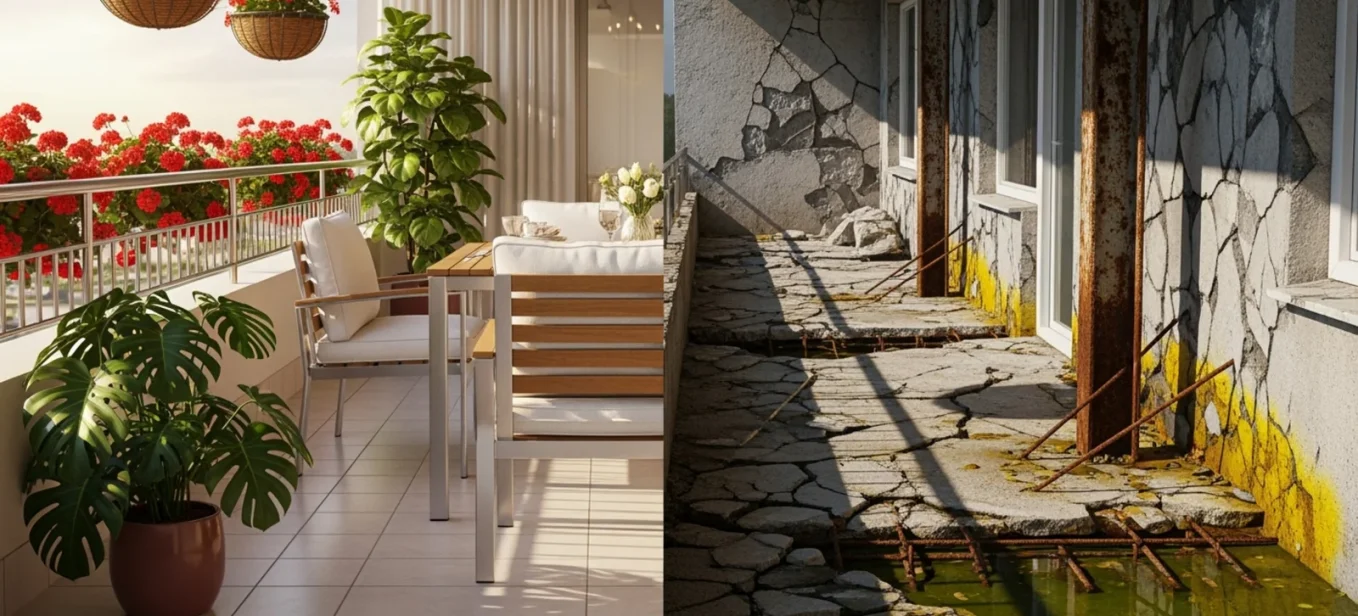
The Best Options for Waterproofing a Balcony or Terrace
- By: Nova Construction Team
- Published:
- Updated: April 27, 2026
Balcony waterproofing is more than just keeping the area dry — it’s essential for protecting your building’s structure, looks, and value over time.
Since balcony decks and terraces face constant exposure to rain, sun, snow, and changing temperatures, they are at high risk of water damage. If water gets below the surface, it can cause serious repair costs, health problems, and drop the value of your property.
This comprehensive guide provides everything you need to know about why balcony waterproofing is so important, what affects your choice of balcony waterproofing systems, how to prepare properly, the most cost-effective waterproofing methods, and how to keep your outdoor area with integrity for years to come.
Why It’s Wise to Waterproof a Balcony or Terrace
Balcony waterproofing is key for keeping balcony decks and terraces in good condition, especially in multi-family buildings where property owners and property managers must consider the number of balconies requiring attention.
Without a proper waterproofing membrane protection, these areas can quickly become weak spots for leaks and other water damage, which can cause bigger issues for the whole building.
1. Stops Leaks and Structural Damage
If water seeps under the balcony surface, it can damage the materials below, including the subfloor and underlying structure. Wood structures can rot, which weakens the frame and can even lead to structural collapse. In concrete structures, water can rust steel bars and metal lath, making the concrete crack and causing instability.
Water leaks can also harm areas below the balcony, leading to discoloration on ceilings, stained walls, and ruined belongings. When ponding occurs due to poor water flow, the risk of long-term structural damage increases significantly. Fixing these issues costs much more than preventative membrane waterproofing.
2. Reduces Maintenance Costs Over Time
High-quality balcony waterproofing systems provide a cost-effective solution that saves money in the long run by preventing maintenance and repair bills. If water damage happens, you might need to rebuild parts or refinish surfaces, which is far more expensive.
The lifespan of a properly installed waterproofing membrane can extend decades, making it the best solution for long-term protection. Property managers of condos and multi-family buildings particularly benefit from this approach.
3. Prevents Mold and Health Hazards
Where there’s moisture, mold can grow. Leaks create damp conditions that breed mold and mildew, which look bad, smell worse, and can cause allergies or breathing problems.
Potentially leaking areas around tile surfaces and joints are especially vulnerable. Proper balcony waterproofing stops moisture from getting in, creating a healthier indoor and outdoor environment.
4. Makes Your Balcony or Terrace Last Longer
With a good impermeable waterproof system that’s compliant with building codes like SB326 and SB721, your outdoor space will handle sun, rain, UV rays, and temperature changes much better. This keeps surfaces looking good and comfortable underfoot for many more years, avoiding early repairs or upgrades and maintaining your property’s value.
Main Things That Affect Balcony Waterproofing
Picking the best solution for your waterproofing needs depends on several factors that can change how well your system works and how long its lifespan will be. Here are some of the biggest influences:
Shape and Drainage of the Balcony or Terrace
How your walkway or terrace space is designed will control water flow. All balconies should slope slightly (at least 2% or 1/4 inch per foot) toward a scupper or drain so water runs off instead of causing ponding. Balconies with corners, built-in railings, or lights may need more flexible membrane waterproofing.
A proper drainage system with gutters and drains is necessary, and these features should be kept clean to prevent deterioration. An expert balcony inspection can help identify problem areas that need extra attention, especially when evaluating whether to waterproof an existing structure or start fresh by removing the existing surface.
Weather and Climate
Your local weather changes the type of balcony waterproofing systems you’ll need. For example, places with heavy rain or freeze-thaw cycles need a more durable, flexible system. Freezing can worsen small cracks and cause blister formation, while strong UV rays can dry out or crack some coatings.
Choose products made to withstand the weather where you live — especially if you have strong sun, lots of rain, or pollution. Water-based systems often provide better eco-friendly options while maintaining durability.
Current Surface Condition and Type
The type and condition of the balcony surface under your terrace (called the substrate) matters significantly. New construction has more choices, but existing balcony decks require careful balcony inspection. Look for cracks, rot, stains, discoloration, or mold.
Damaged floor finishes, including tile or texture coat, usually must be removed. The subfloor should be examined for structural integrity. Cracks and holes should be fixed before membrane waterproofing. Cleaning thoroughly means the new system will stick better and provide integrity for years to come.
Preparing for Balcony or Terrace Waterproofing
Balcony waterproofing works best if the company starts with good surface preparation. Skipping these steps makes the project more likely to fail early, leading to higher repair costs.
1. Checking the Surface
First, it’s important to conduct a thorough balcony inspection looking for cracks, stains, soft spots, mold, or ponding water on the balcony’s surface. Professionals use a level to check the slope toward the scupper or drain. If they see major problems or possible structural issues, especially in multi-family buildings where SB721 and SB326 compliance is required, it’s time to act.
Property owners need a clear picture of the condition to pick the right system and determine whether removing the existing surface is necessary.
2. Cleaning and Fixing the Underlying Layer
Professionals sweep away dirt, leaves, and dust from the walkway surface. Some companies use a power washer for deep cleaning, but they let the surface dry before adding anything new.
Next, they strip off old finishes or waterproof coatings that aren’t compatible with your new products. Then they will fix any cracks or rotten spots using the appropriate material.
Pay attention to the subfloor and any metal lath reinforcement. Contractors should aim for a clean, solid, and smooth surface to help the waterproofing membrane work properly and extend its lifespan.
3. Sealing Cracks and Joints
All cracks, seams, and joints should be sealed with the right type of sealant (polyurethane sealants, silicone, or acrylic, depending on your surface). Pay extra attention to places where the balcony meets a wall, around railings, or where anything cuts through the surface. Many companies use flashing or reinforcement materials to make these connections watertight and prevent deterioration.
Property managers should ensure proper water flow and fix any incorrect slopes before starting waterproofing.

Main Waterproofing Solutions for Balcony Decks and Terraces
There are several strong balcony waterproofing systems for balconies and terraces. Here are the most commonly used types that membranes provide:
| Type | Main Features | Best For | Drawbacks |
| Liquid Waterproofing | Applied with a brush, roller, or spray; dries to a flexible, seamless impermeable layer | Irregular surfaces, balconies with complex shapes or lots of details; works well over tile | Can be trickier for DIY; surface must be completely clean and dry |
| Sheet Membrane | Pre-made rolls (PVC, polyethylene, bitumen, EPDM); often self-adhesive or heat-bonded in place | Flat, large plaza areas and walkway surfaces; quick installation | Not as flexible for corners or odd shapes; may require removing the existing surface |
| Cementitious Coatings | Water-based waterproofing chemicals added to cement mix; easy to apply with texture coat finish | Basic, stable concrete or plywood surfaces in condos | Not very flexible; may crack if the structure shifts |
| Polyurethane Coatings | Flexible, durable, UV-resistant; fills in small cracks and can sheathe the surface | Areas needing flexibility, some structural movement expected | Requires several layers; must go on dry base |
| Rubberized Asphalt | Hot-applied or self-adhesive membrane system | Large commercial plaza installations | Requires professional installation; sensitive to temperature |
How to Choose the Best Waterproof System
The best solution depends on your specific waterproofing needs — there’s no single answer for everyone. Property owners and property managers should consider the following scenarios:
- New or undamaged surfaces: Choose cutting-edge systems; liquid waterproofing or high-quality sheet membrane systems work well here. These provide excellent lifespan and are often eco-friendly options.
- Damaged surfaces or underneath layers: Removing the existing flooring is often necessary. Repair cracks or rot, then use a more complex system, often mixing sheet membrane and liquid waterproofing approaches. Consider the subfloor condition and whether metal lath reinforcement is needed.
Balance the initial price with maintenance and repair bills you might need later. Durable systems may cost more at first but provide a cost-effective solution over time by lasting longer and needing fewer repairs.
Extra Waterproofing Techniques and Supports
Main membrane waterproofing methods work best when used with extra protection in key areas:
- Sealants and Caulking: Use polyurethane sealants around edges, railings, and drains to fill gaps and keep water out. Pick products (polyurethane, silicone, acrylic) that match your substrate and movement needs. These prevent blister formation and discoloration.
- Waterproofing Tapes and Flashing: Tapes cover joints and seams for extra strength. Flashing (metal or rubber strips) channels water flow away from the wall or foundation, preventing ponding and long-term structural damage.
- Improved Drainage: Ensure the balcony surface is sloped correctly toward scupper drains and use drainage mats or internal drains. A proper drainage system prevents water from pooling and helps direct it away, keeping your waterproofing membrane working effectively and maintaining integrity for years to come.

Common Waterproofing Mistakes to Avoid
Even quality balcony waterproofing systems can fail if you make these common errors:
- Poor Surface Preparation: If the company skips cleaning or repairing the balcony surface first, including proper balcony inspection, the system may not stick or will break down quickly, leading to potentially leaking conditions.
- Bad Drainage Slopes: Without proper slopes to direct water flow to the scupper, water will cause ponding and put extra stress on your membrane, leading to deterioration.
- Mixing Incompatible Materials: Not all products work well together — using the wrong combinations of water-based and solvent-based systems can lead to failure.
Maintaining Your Waterproofed Balcony or Terrace
Installing balcony waterproofing systems is the first step, but regular care keeps them effective and extends their lifespan.
- Frequent Checks and Cleaning: Conduct a balcony inspection every six months, especially after harsh weather and UV rays exposure. Look for cracks, peeling, blister formation, discoloration, or ponding water. Sweep off debris from walkway surfaces and keep scupper drains clear.
- Quick Repairs: Fix small issues right away — patch cracks, fill holes, and replace worn polyurethane sealants as soon as you spot them. This prevents potentially leaking areas from developing into major problems.
- Reseal When Needed: Depending on the product, you may need to add a fresh texture coat every 5-10 years. This extra layer keeps the main waterproofing membrane protected from UV rays and wear, ensuring cost-effective maintenance.
The Bottom Line
Following these steps will help your waterproofed balcony decks and terraces last for decades, keeping your building safe, attractive, and financially sound while providing everything you need for effective waterproofing protection underfoot.
If you see big problems affecting the subfloor or impermeable barrier — call a professional. Doing large repairs without the right tools or knowledge can lead to more damage and higher repair costs.
At Nova Construction Services, we pride ourselves for our excellent service. Contact us to learn how we can help you!
Got a project in mind?
Let’s talk with Local Law 11 Experts about bringing your construction vision to life!
