
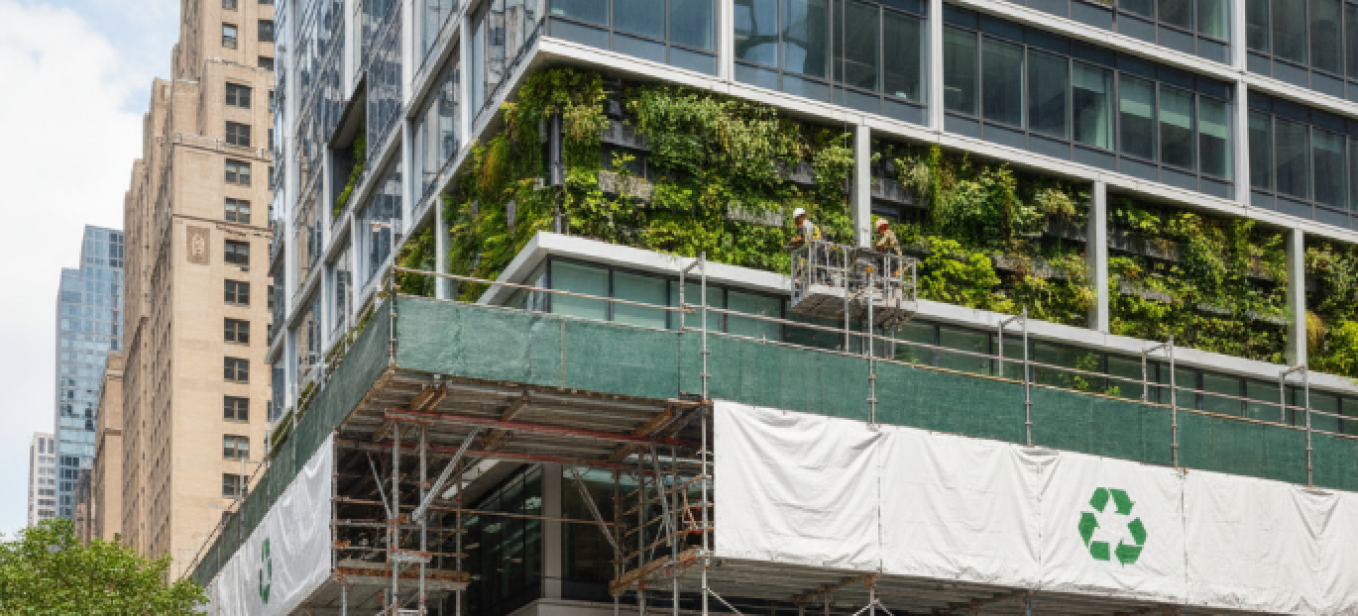
Sustainability and the Environmental Impact of Local Law 11
- By: Nova Construction Team
- Published:
- Updated: March 11, 2026
New York City’s Facade Inspection and Safety Program—mandated by Local Law 11—serves an obvious purpose: preventing facade failures that endanger pedestrians. Less recognized but equally significant, the law promotes environmental sustainability by encouraging preventive maintenance, extending building lifecycles, and reducing construction waste. Building owners focused on sustainability goals can leverage Local Law 11 inspections as a framework for environmentally responsible facade management.
The every five years inspection cycle creates opportunities to identify minor deterioration before it escalates into failures requiring extensive material replacement. This preventive approach aligns with circular economy principles and reduces the environmental burden of building operations across the city’s aging building stock.
Preservation Over Replacement Reduces Embodied Carbon
Buildings over six stories subject to Local Law 11 represent enormous repositories of embodied carbon—the greenhouse gas emissions from manufacturing, transporting, and installing construction materials decades or centuries ago. When facade inspections identify problems early, targeted repairs preserve these existing materials rather than replacing entire building skins.
Consider a masonry facade with localized mortar deterioration. Catching this through a facade inspection allows selective repointing that addresses the specific problem areas. Without regular inspections, that deterioration spreads unchecked for years until entire sections destabilize, requiring wholesale masonry replacement. The environmental difference is substantial:
- Repointing mortar joints uses minimal new material—mainly lime or cement-based mortars with low embodied energy compared to manufacturing new bricks or stone
- Preserving original masonry retains the embodied carbon already invested in those materials
- Avoiding demolition eliminates disposal impacts and landfill burden from removed facade elements
- Reduced material transportation cuts diesel emissions from hauling replacement materials to urban building sites
Qualified exterior wall inspectors trained to identify early deterioration enable building owners to make repair decisions when interventions are least invasive. This inspection-driven maintenance extends facade lifespan far beyond what reactive management achieves, multiplying the environmental return on the original construction investment.
Waste Reduction Through Strategic Repair Planning
Emergency facade repairs generate disproportionate waste compared to planned maintenance programs. When unsafe conditions force immediate action, contractors often remove more material than necessary to ensure stability and meet compressed timelines. Debris gets hauled to landfills without opportunities for salvage or recycling that planned projects allow.
Local Law 11 inspection cycles create predictable maintenance schedules that reduce this emergency waste. Building owners receiving SWARMP ratings—Safe with a Repair and Maintenance Program—can plan facade work during optimal weather windows, coordinate with other building projects, and specify repair approaches that minimize material removal.
Planned facade work also enables material recovery strategies rarely feasible during emergency repairs:
- Architectural salvage of terra cotta, limestone, or decorative elements for reuse elsewhere in the building or sale to preservation projects
- Recycling metal components like copper flashing, steel lintels, and cast iron elements recovered during masonry work
- Crushing removed masonry for aggregate in new concrete rather than landfilling intact
- Coordination with landmark preservation requirements that mandate salvaging character-defining materials
The Department of Buildings requires documentation of inspection findings and repair approaches, creating accountability that encourages thoughtful material management. Registered architects preparing reports must justify repair scopes, discouraging unnecessarily aggressive interventions that waste embodied resources.
Material Selection and Sustainable Repair Methods
Local Law 11 inspections identify specific facade deficiencies without mandating particular repair materials or methods. This flexibility allows building owners to specify sustainable alternatives when addressing inspection findings. Modern repair technologies often perform better environmentally than traditional approaches while meeting or exceeding durability requirements.
For mortar repointing identified during facade inspections, lime-based mortars offer environmental advantages over Portland cement formulations. Lime mortars require lower firing temperatures during manufacturing, reducing production emissions. They also allow moisture vapor transmission through masonry walls, preventing trapped moisture that accelerates deterioration and shortens repair intervals.
When inspection findings require replacing deteriorated stone or terra cotta, alternatives like GFRC GFRP cornice restoration use glass fiber reinforced concrete with lower embodied carbon than quarrying and transporting natural stone. These engineered materials match original appearance while reducing weight loads on structures—sometimes eliminating needs for additional structural reinforcement and its associated carbon footprint.
Facade cleaning identified during inspections can use low-pressure water methods or environmentally safe chemical cleaners rather than abrasive techniques that remove sound material. Facade and stone cleaning with appropriate methods restores appearance without the waste and carbon burden of surface replacement.
Energy Performance and Building Envelope Integrity
Facade inspections reveal more than structural safety issues. Qualified inspectors often identify areas where deteriorating masonry, failed sealants, or damaged flashing compromise building envelope performance. Air infiltration through these defects increases heating and cooling loads, wasting energy throughout the five-year inspection cycle.
Addressing envelope deficiencies during mandated repair work improves energy efficiency without requiring separate interventions:
- Repointing mortar joints eliminates air leakage paths through deteriorated areas
- Replacing failed expansion joint sealants restores thermal breaks between facade sections
- Repairing damaged flashing prevents water infiltration that degrades insulation performance
- Correcting spalling concrete repairs thermal bridging where exposed reinforcing creates heat loss
These co-benefits often go unrealized without inspection programs that identify problems. Building owners focused solely on structural safety might overlook envelope performance issues that an architect reviewing facade conditions naturally includes in comprehensive reports.
The mandate for inspections every five years also creates touchpoints for evaluating energy retrofit opportunities. Properties approaching major facade repairs can integrate insulation upgrades, window replacements, or air barrier installations into scaffold-supported work that’s already occurring for code compliance.
Reducing Urban Heat Island Effects Through Facade Maintenance
New York’s dense building fabric contributes to urban heat island effects that increase summer cooling demands and worsen heat health impacts. Facade condition influences surface temperatures and solar heat absorption in ways that affect microclimate at neighborhood scale.
Clean, well-maintained facades reflect more solar radiation than deteriorated surfaces encrusted with atmospheric pollution. Inspection-driven cleaning and repair programs maintain higher surface albedo, reducing heat absorption. Dark staining from biological growth, soot deposits, or rust bleeding gets removed during facade cleaning, restoring lighter original surface colors.
Certain facade issues identified during Local Law 11 inspections directly worsen heat island effects if left unaddressed:
- Corroded metal panels or deteriorated coatings that darken surfaces and increase solar absorption
- Failed waterproofing allowing moisture infiltration that degrades insulation and increases cooling loads
- Damaged or missing roof components identified during parapet inspections that reduce roof reflectivity
Addressing these findings maintains building envelope performance that moderates urban temperatures. Properties completing roofing waterproofing work triggered by parapet inspections can specify high-albedo roofing materials that reflect solar radiation, cutting cooling energy and reducing heat island contribution.
Creating Environmental Accountability Through Documentation
Local Law 11’s documentation requirements create transparency around facade maintenance decisions. Building owners must file inspection reports with the DOB describing conditions found and repairs planned. This public record establishes environmental accountability—properties deferring necessary maintenance face violations that signal poor stewardship to sustainability-focused stakeholders.
The five-year inspection mandate also forces long-term thinking incompatible with neglectful property management. Owners can’t ignore deteriorating facades indefinitely; regulatory pressure ensures periodic assessment and intervention. This structured approach prevents the extreme deferred maintenance that ultimately necessitates energy-intensive, waste-generating emergency replacements.
For building owners pursuing green building certifications or ESG investment criteria, documented Local Law 11 compliance demonstrates responsible asset management. Clean inspection histories signal commitment to preserving existing building resources rather than allowing deterioration that forces premature reconstruction.
How Nova Construction Can Help You
Nova Construction Services integrates sustainability principles into Local Law 11 compliance programs for building owners prioritizing environmental performance. Inspection protocols identify opportunities for environmentally responsible repairs, material specifications prioritize low-carbon alternatives, and waste management plans maximize salvage and recycling during facade work.
Whether addressing masonry restoration with traditional lime mortars, specifying terra cotta repair and replacement using salvaged materials, or coordinating facade work with energy efficiency upgrades, Nova Construction helps building owners meet compliance obligations while advancing sustainability goals.
Pre-inspection assessments identify facade conditions before mandatory filing deadlines, allowing strategic planning that minimizes waste and embodied carbon in repair approaches. From initial evaluation through repair completion and DOB filing, Nova Construction manages Local Law 11 requirements as opportunities to enhance both safety and environmental performance. Contact Nova Construction Services to discuss sustainable facade maintenance strategies for your property.
Got a project in mind?
Let’s talk with Local Law 11 Experts about bringing your construction vision to life!
