
Types of Scaffolding – Suspended Scaffolds
- By: Nova Construction Team
- Published:
- Updated: March 11, 2026
When building owners need to maintain, repair, or inspect exterior facades on mid-rise and high-rise structures, suspended scaffold systems provide access where traditional ground-supported scaffolding can’t reach. These specialized platforms suspend from overhead structures, allowing workers to perform tasks at various heights without occupying ground-level space—a critical advantage in dense urban environments.
What Makes Suspended Scaffolding Different
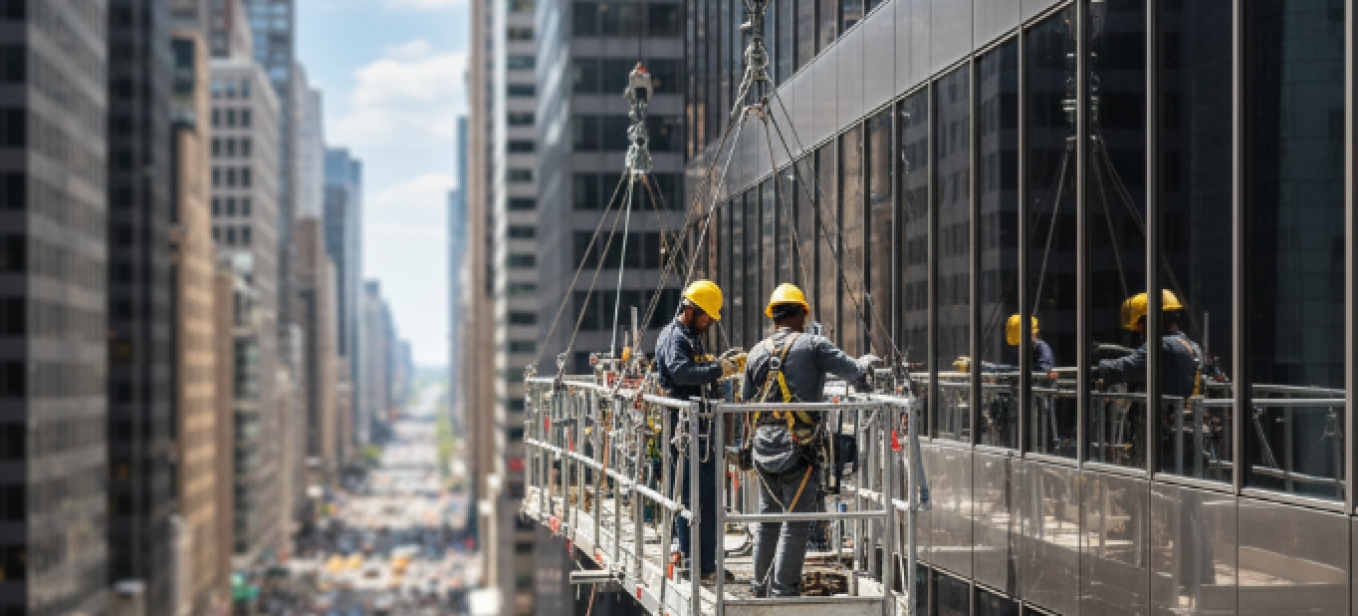
Unlike conventional scaffold types that build upward from the ground, suspended scaffolds hang from roofs, parapets, or other overhead structures. The platform descends and ascends using rope, cable, or hoist mechanisms controlled by workers on the platform itself. This fundamental difference makes suspended scaffold systems ideal for facade restorations, window installations, and exterior maintenance on buildings where ground access is limited or impractical.
The versatility of suspended scaffolding extends beyond just height access. Property managers dealing with occupied buildings appreciate how these systems minimize ground-level disruption compared to traditional built-up scaffolding.
While overhead protection must still be provided (either through the installation of a sidewalk shed or the establishment of a controlled access zone) suspended systems significantly reduce the footprint of the work area.
Common Types of Suspended Scaffold Systems
The construction industry relies on several distinct suspended scaffold configurations, each designed for specific applications:
Two-Point Adjustable Suspension Scaffolds
Also called swing stages, these platforms suspend from two separate suspension points using independent hoists or rope systems. The platform typically ranges from 12 to 40 feet in length, providing substantial work area for crews performing tasks like masonry restoration, stucco installation, welding, painting, and other exterior maintenance services. Each suspension point operates independently, allowing workers to adjust the platform angle if needed.
Load capacity varies by design, but most two-point systems handle between 500 and 1,000 pounds. The beam or outrigger assembly that supports the suspension scaffold extends beyond the roof edge, secured by counterweights or anchoring systems that prevent tipping. Workers operate electric or manual hoists to raise and lower the platform as work progresses down the building facade.
Single-Point Adjustable Suspension Scaffolds
These smaller work platforms suspend from a single overhead support point. The platform, usually circular or rectangular, accommodates one or two workers and their tools. A single hoist raises and lowers the entire assembly. Building maintenance crews use single-point suspended scaffolds for focused tasks like replacing individual windows, performing spot repairs, or conducting detailed inspections.
The overhead structure supporting a single-point system must be engineered to handle dynamic loads as workers move on the platform. Proper rigging becomes critical—the suspension point needs adequate strength, and the cable or rope must be rated for the combined weight of platform, workers, and materials with appropriate safety factors.
Multi-Point Adjustable Suspension Scaffolds
When facade work spans wide building sections, multi-point adjustable systems provide the solution. These platforms suspend from more than two points, creating stable work surfaces that can extend across entire building faces. Each suspension point has its own hoist or winch, allowing precise leveling across uneven roof lines or architectural features.
Multi-point systems work particularly well for buildings with complex facades requiring simultaneous access to multiple areas. The additional suspension points distribute loads more evenly and reduce stress on any single structural support. This makes them suitable for delicate work on historic structures or buildings with aging overhead structures.
Multi-Level Suspended Scaffolds
These sophisticated systems stack multiple platforms vertically, all suspended from the same overhead support structure. Each level operates independently, allowing crews to work at different heights simultaneously. Multi-level configurations maximize productivity on large-scale projects like complete facade renovations or facade and stone cleaning operations covering entire building exteriors.
The engineering requirements for multi-level suspended scaffolds are substantial. Each platform level needs separate suspension mechanisms, and the overhead structure must support the cumulative weight of all platforms plus workers and materials. Building owners considering multi-level systems should verify their structure can handle these concentrated loads.
Selecting the Right Type of Suspended Scaffolding
Choosing appropriate suspended scaffold systems depends on several project-specific factors:
- Building height and configuration
- Type and duration of work being performed
- Available roof structure and load capacity
- Urban density and ground-level access restrictions
High-rise buildings in urban cores often demand swing stage systems for exterior maintenance because ground space is unavailable or prohibitively expensive. While these systems require overhead protection (such as sidewalk sheds or controlled access zones) to ensure the safety of those below, they offer a significantly smaller footprint than ground-based scaffolding.
The scaffold can be installed and used for weeks or months as work progresses, maintaining a much clearer path for pedestrian and vehicle traffic throughout the project.
Safety Considerations for Suspended Scaffold Operations
Regulatory compliance for suspended scaffold work falls under strict OSHA standards. Every platform must have guardrails, and workers need fall protection tied to independent lifelines—not the scaffold itself. Regular inspections verify that rope, cable, and hoist mechanisms show no signs of wear or damage.
The stirrup or beam assembly supporting the scaffold requires engineering calculations specific to each installation. Improper weight distribution or inadequate anchoring can lead to catastrophic failures. Building owners should insist that contractors provide certified rigging plans and daily inspection logs, and provide a copy of the CD-5 filing (suspended scaffold application) where required by local regulations.
Weather conditions affect suspended scaffold safety significantly. High winds create dangerous lateral forces on platforms, while ice on rope or cable compromises grip in hoist drums. Competent persons must evaluate conditions before each work shift and halt operations when weather exceeds safe parameters.
In New York City, the Department of Buildings (DOB) mandates strict adherence to weather advisories. Operations must cease when wind speeds exceed 30 mph, and equipment must be properly secured or “nested” at the ground or a safe setback level.
Additionally, per NYC Building Code, contractors are required to sign up for DOB weather alerts and may be subject to Commissioner’s Orders to jump or dismantle scaffolding during forecasted high-wind events or severe storms.
How Nova Construction Can Help You
Nova Construction Services maintains a fleet of modern suspended scaffolding equipment and employs crews trained in complex rigging operations. Every installation is overseen by a licensed Special Rigger, as required by NYC Department of Buildings regulations for the installation, hoisting, and use of suspended scaffolds. Whether your building needs routine facade maintenance or extensive Local Law 11 repairs, the right suspended scaffold system can be engineered and installed to meet project requirements.
Every installation begins with structural evaluation of your building’s roof and parapet conditions. Engineers assess load capacity, identify optimal suspension points, and design support beam configurations that protect your property while providing safe, stable work platforms. For buildings where suspended scaffold systems aren’t feasible, alternatives like pipe scaffolding or sidewalk sheds can be evaluated.
From initial planning through project completion, Nova Construction coordinates all aspects of scaffold installation, inspection, and eventual dismantle. This turnkey approach lets building owners focus on their properties while the technical complexities of safe suspended scaffold operations are handled by experienced professionals. Contact Nova Construction Services to discuss how suspended scaffolding can provide access solutions for your next exterior building project.
Got a project in mind?
Let’s talk with Local Law 11 Experts about bringing your construction vision to life!
