
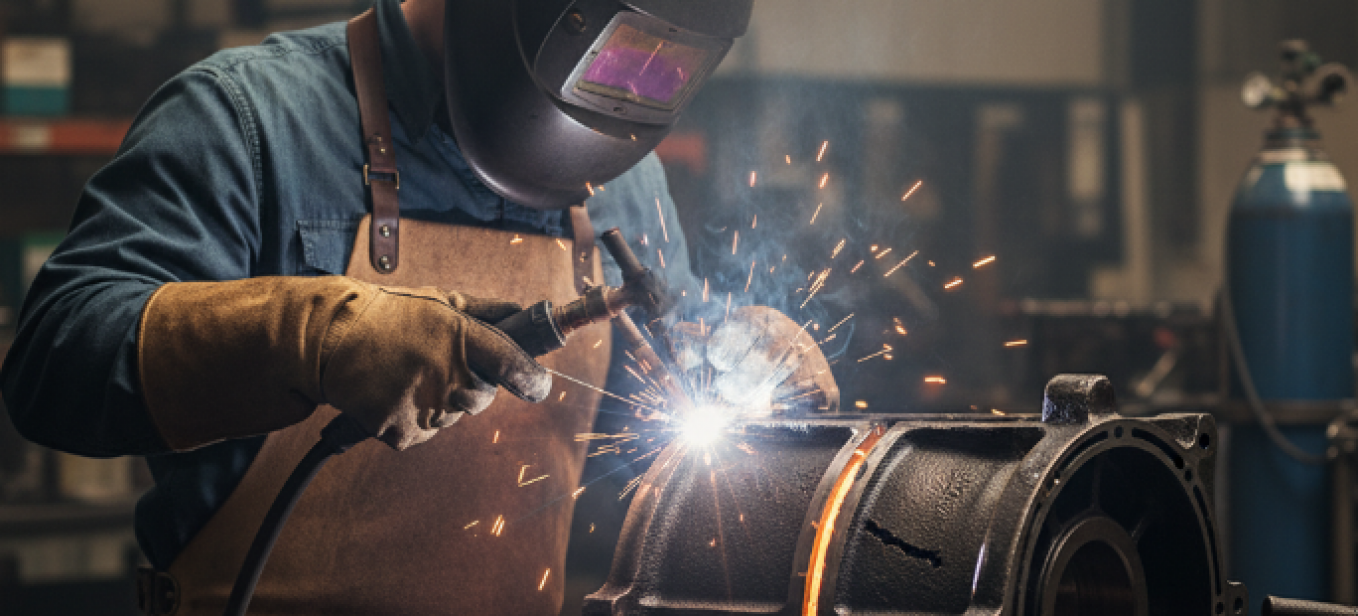
How to Weld Cast Iron | Cast Iron Crack Repair
- By: Nova Construction Team
- Published:
- Updated: March 11, 2026
Cast iron architectural elements—cornices, railings, structural columns, and decorative facades—require specialized repair techniques when cracks develop or sections fail. Unlike steel or aluminum, cast iron presents unique welding challenges due to its carbon content, brittleness, and tendency to crack when heated and cooled improperly. Building owners dealing with damaged cast iron must understand repair options to make informed decisions about restoration approaches.
Historic buildings throughout urban centers contain cast iron components installed decades or centuries ago. These elements continue performing structural and aesthetic functions, but age, corrosion, and mechanical stress eventually cause damage. Proper repair extends service life while maintaining architectural integrity, avoiding the expense and complexity of complete replacement.
Why Cast Iron Requires Special Repair Techniques
The material properties that make cast iron excellent for casting complex shapes also make it difficult to weld. Cast iron contains 2-4% carbon, significantly higher than steel’s typical 0.3% or less. This high carbon content creates a brittle matrix that cracks easily under thermal stress. When standard welding procedures heat cast iron to melting temperature, rapid cooling creates internal stresses that propagate new cracks adjacent to the repair area.
Cast iron casting processes create different material structures depending on cooling rates and alloying elements. Gray cast iron, the most common type in older buildings, contains carbon as graphite flakes throughout the material. These flakes act as stress concentrators, making the material prone to crack propagation. White cast iron, harder and more brittle, poses even greater welding challenges.
Understanding the casting type before attempting repairs determines which techniques will succeed. Gray cast iron responds reasonably well to certain welding processes when proper procedures are followed, while white cast iron often requires alternative repair methods like brazing or mechanical fastening.
Welding Methods for Cast Iron Repair
Several welding processes can repair cast iron cracks and breaks when applied correctly. Each method has specific advantages depending on the component’s size, location, and stress requirements.
Hot Welding with Preheat
Hot welding involves heating the entire casting or a large section surrounding the crack to 500-1200°F before welding begins. This preheat reduces thermal gradients when the weld pool forms, minimizing stress that causes cracking. After welding cast iron with preheat, controlled slow cooling—often using insulating blankets or burial in sand—prevents thermal shock.
The process works well for large structural cast iron elements where heat can be applied uniformly. A welder uses cast iron filler rod or nickel alloy rod depending on strength requirements and machinability needs. Multiple passes build up the weld, with each pass reheated to proper temperature before adding more filler.
Preheat welding requires substantial equipment and time. Gas torches, induction heaters, or furnaces bring the casting to temperature. Temperature monitoring with thermocouples or temperature-indicating crayons ensures uniform heating. For cast iron repair replacement on installed building components, preheat may not be practical due to fire hazards or inability to heat the entire element uniformly.
Cold Welding Techniques
Cold welding repairs cast iron at or near room temperature, eliminating preheat requirements. The technique relies on low-heat welding processes and special filler materials that accommodate the stresses from localized heating. Nickel and nickel-iron rods work particularly well for cold welding because they remain ductile after solidification, absorbing stresses rather than cracking.
Short weld beads—rarely longer than one inch—are deposited in a specific sequence, often called the skip or stagger technique. The welder allows each bead to cool before welding adjacent areas. This approach minimizes heat buildup in any single location. Peening each weld pass with a hammer while still hot helps relieve residual stresses by plastically deforming the cooling metal.
Cold welding offers advantages for field repairs where preheat isn’t feasible. The process works on smaller cracks and breaks, though it may not develop full base metal strength. For architectural elements under minimal structural load, cold welding provides adequate repair strength while preserving the original casting.
Braze Welding Cast Iron
Braze welding deposits filler metal that melts at temperatures below the cast iron’s melting point. The base metal doesn’t melt; instead, the braze filler flows into the crack through capillary action and bonds metallurgically to the heated cast iron surface. This lower temperature process reduces thermal stress and cracking risk.
Bronze and nickel-based braze alloys are common choices. The crack or break requires careful preparation—grinding to create a groove, cleaning to remove all contaminants, and sometimes drilling stop holes at crack ends to prevent propagation. A torch heats the area while braze rod is fed into the joint. Proper flux prevents oxidation and promotes wetting.
Braze repairs don’t match cast iron’s strength or color but provide durable bonds adequate for many applications. The technique works particularly well for:
- Ornamental railings and decorative elements with minimal structural loads
- Crack repairs where complete strength restoration isn’t critical
- Components where welding heat would damage adjacent materials or finishes
- Situations requiring field repairs without preheat equipment
Buildings with historic cornice restoration and replacement needs often use braze welding to save original cast iron elements rather than manufacturing complete replacements.
Alternative Repair Methods
Not every cast iron crack requires welding. Alternative approaches sometimes offer better solutions depending on damage severity and component function.
Epoxy Injection and Bonding
High-strength epoxy systems can repair cast iron cracks without heat or mechanical fasteners. The crack gets sealed, cleaned, and injected with two-part epoxy that flows through the fracture. Once cured, the epoxy bonds crack faces together and provides some tensile strength across the damaged area.
Epoxy repairs work best for non-structural components or cracks under compression loads. The repair is invisible when properly executed, making it attractive for architectural elements where aesthetics matter. However, epoxy doesn’t restore full casting strength and may fail under impact or cyclic loading.
Mechanical Fastening with Stitching
Lock stitching involves drilling holes across a crack and inserting interlocking metal keys that mechanically join the fractured sections. The keys—typically brass or ductile iron—are installed in precision-drilled tapered holes and locked together with overlapping patterns. This technique predates welding and remains relevant for large structural cracks where welding risks are too high.
Stitching requires minimal heat, reduces crack propagation risk, and can be performed on installed components. The process is labor-intensive and requires skilled craftspeople to execute properly. Modern stitching often combines mechanical keys with epoxy filler to seal the joint and provide additional bonding.
Selecting the Right Repair Approach
Choosing between welding, brazing, epoxy, or mechanical repair depends on several factors building owners should discuss with contractors:
- Structural load requirements and stress conditions on the component
- Accessibility for equipment and whether preheat is feasible
- Architectural significance and whether repairs must be invisible
- Budget constraints and project timeline
- Long-term durability expectations versus temporary stabilization
Cast iron components in critical structural roles typically require hot welding with preheat or complete replacement to ensure adequate strength. Decorative elements tolerate less robust repairs like cold welding or brazing. Fire escape systems fall under strict code requirements that may mandate specific repair procedures or professional certification.
How Nova Construction Can Help You
Nova Construction Services employs certified welders trained in cast iron repair techniques for architectural metals throughout New York buildings. Whether addressing cracked fire escape restoration components, damaged cornices, or structural cast iron columns, proper assessment determines which repair method provides lasting results.
Each repair project begins with damage evaluation—examining crack patterns, testing for material composition, and analyzing stress conditions. TIG welding equipment, preheat systems, and specialized filler materials allow tailoring the repair approach to specific project requirements. For components beyond economical repair, Nova Construction can source or fabricate replacement castings that match original details.
Field repairs on installed building elements present unique challenges requiring experienced professionals who understand how to work safely on occupied buildings while managing fire watch requirements and tenant coordination. From small ornamental crack repairs to major structural steel restoration and replacement projects involving cast iron elements, Nova Construction provides the expertise to restore historic architectural metals. Contact Nova Construction Services to discuss cast iron repair options for your building.
Got a project in mind?
Let’s talk with Local Law 11 Experts about bringing your construction vision to life!
