
Local Law 11 for Historical Buildings NYC
Local Law 11 Façade Repairs for NYC Historic and Historically Significant Buildings
New York City’s stock of historic buildings presents some of the most demanding and rewarding challenges in exterior restoration.
When a historically significant building is subject to Local Law 11 compliance, the stakes are higher. Substandard repairs can permanently alter historic character, violate regulatory requirements, and create costly remediation problems.
Nova Construction Services has spent 30 years mastering the intersection of Local Law 11 compliance and historic building restoration in Manhattan.
Our portfolio includes the Dakota, Terminal Warehouse, the Bayard-Condict Building by Louis Sullivan, and St. Paul’s Chapel.
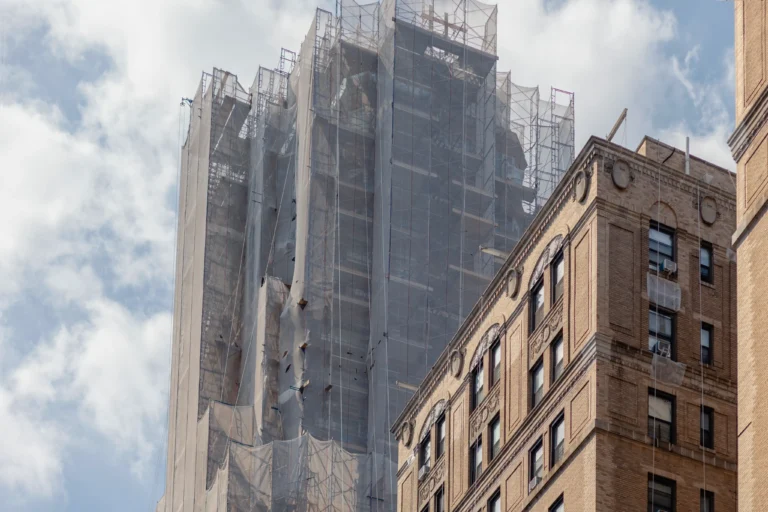
Manhattan's Historic Building Restoration Experts
30+ years restoring historically significant buildings across Manhattan
Over 250 exterior restoration and preservation projects completed in NYC
Lucy G. Moses Preservation Award recipient — New York Landmarks Conservancy's highest honor
Deep experience with both designated NYC Landmarks and National Register properties
Trusted by New York's most respected preservation architects
Expertise spanning Beaux-Arts, Renaissance Revival, Gothic, Chicago School, Art Deco, and more
FISP Compliance on Historically Significant Buildings
Every NYC building taller than six stories must comply with Local Law 11 / FISP — the five-year exterior inspection and repair mandate.
For historically significant buildings, this obligation is overlaid with a series of additional requirements and constraints that set historic work apart from standard façade repair.
1. Regulatory Complexity: DOB and LPC
NYC Landmark-designated buildings and properties within historic districts require Landmarks Preservation Commission (LPC) approval before any exterior repair work can begin. This is a separate process from DOB permitting, and it requires detailed documentation of proposed methods and materials.
The LPC review period adds time to the preconstruction phase, making early planning essential.
2. Material Authenticity
Historic buildings were constructed with materials that are no longer in standard commercial production:
- hand-pressed brick in specific dimensions and textures
- terra cotta in glazed profiles matched to century-old molds
- natural limestone from specific quarries
- ornamental cast iron in intricate patterns
- traditional hot-applied copper work
Replacing these materials with modern substitutes can violate LPC standards and accelerate deterioration of adjacent original materials.
3. Structural and Assemblage Knowledge
Older buildings were constructed with techniques and assemblages that differ significantly from modern construction. Masonry was laid in historic lime mortars that are fundamentally incompatible with modern Portland cement. Structural systems may include wrought iron, early steel, or unreinforced masonry.
Nova’s team understands these systems and how to repair them without causing damage.
Nova Construction Services performs exterior façade repairs and restoration work. We do not provide inspections, advise on findings, or provide regulatory compliance advice. Required work is determined by your QEWI; Nova executes it with the precision historic buildings demand.
Nova's Exterior Restoration Services for Historic Buildings Under Local Law 11
Nova’s historic building scope under Local Law 11 covers all conditions identified by your inspector, executed in compliance with LPC standards and preservation best practices:
- Period-accurate masonry restoration with compatible lime-based mortar
- Custom terra cotta repair and in-kind replacement with matched glazing and profiles
- Carved limestone, brownstone, granite, and bluestone repair, Dutchman patching, and reconstruction
- Cast iron and wrought iron repair, consolidation, and replacement
- Ornamental copper work: cornices, flashings, skylight replacement, gutters
- Architectural metals restoration: railings, spandrels, window frames, canopies
- Historic window restoration and weatherization
- Parapet and balustrade reconstruction in original materials
- Stucco and exterior plaster repair
- Façade and stone cleaning using LPC-approved, reversible methods
- Mortar and stone analysis
- LPC application coordination and pre-approval documentation support
- DOB permit acquisition and closeout
Our Process for Local Law 11 Compliance on Historic Buildings
-
1
Step 1 — Building Assessment and Regulatory Review
We review your inspection report and assess the building's regulatory status (LPC designation, historic district, National Register listing). We identify which repairs require LPC pre-approval and develop the documentation and approval strategy in coordination with your preservation architect.
-
2
Step 2 — Material Analysis and Custom Sourcing
For historic buildings, material matching is critical. Nova conducts or commissions mortar analysis, stone matching, and terra cotta profile assessment as needed. We identify appropriate sources for replacement materials and fabrication options for custom elements.
-
3
Step 3 — LPC Coordination and DOB Permitting
Working with your preservation architect, Nova prepares and submits LPC applications covering proposed repair methods and material specifications. Once approvals are in hand, DOB permits are pulled. The process is fully documented to protect the owner in the event of any future regulatory inquiry.
-
4
Step 4 — Expert Repair Execution by Trained Preservation Craftspeople
Nova's field crews are experienced in the specialized techniques required for historic exterior repair: hand-tooled repointing, custom stone carving, hot-metal copper work, cast iron consolidation, and more. Every detail is executed to preservation standards.
-
5
Step 5 — Completion, Documentation, and DOB Closeout
At project completion, we support your QEWI, preservation architect, and the DOB in completing all required documentation. A detailed photographic and material record is maintained throughout the project for your building's preservation archives.
Why Historic Buildings Need More Lead Time for FISP Compliance
The five-year FISP cycle imposes the same filing deadlines on historic buildings as on any other qualified structure. But the path to compliance is longer for historic properties — and the consequences of rushed decisions are more severe.
- LPC review and approval timelines must be factored into the pre-construction schedule
- Custom material sourcing can take weeks or months for rare or obsolete historic materials
- Complex historic buildings often require more extensive site investigation before accurate scopes can be defined
- Unsafe conditions require immediate public protection regardless of historic status — LPC has expedited procedures for emergencies
Nova recommends that owners of historically significant Manhattan buildings begin contractor and preservation architect engagement at least 12–18 months before their FISP filing deadline. Early engagement allows time for proper documentation, material sourcing, regulatory approvals, and careful project planning.
Why Historic Building Owners Choose Nova for Local Law 11
- 30 years of dedicated exterior restoration work on Manhattan's most significant historic buildings
- Lucy G. Moses Preservation Award recipient — the highest preservation honor in New York City
- Deep LPC process expertise: documentation, approvals, material compliance
- Specialist trade capabilities: terra cotta, carved stone, ornamental copper, cast iron, historic lime mortars
- Established relationships with NYC's leading preservation architects and structural engineers
- End-to-end service: from regulatory strategy and material sourcing through construction and DOB closeout
- A portfolio of landmark projects that demonstrates our preservation expertise
Frequently Asked Questions: Local Law 11 for NYC Historic Buildings
Buildings designated as individual NYC Landmarks or located within an NYC Historic District require LPC approval for exterior work. Buildings listed on the National Register of Historic Places but not designated by the LPC are governed by different (federal) review processes. Nova can help you understand which regulatory regime applies to your building.
NYC Landmark designation is administered by the NYC Landmarks Preservation Commission and has regulatory teeth — repairs require LPC approval. National Register listing is a federal honor that generally does not impose local repair approval requirements, though it may affect eligibility for historic tax credits.
Modern materials that do not match the original in appearance, composition, or performance are generally not acceptable under LPC standards for landmark buildings. In some cases, compatible modern materials may be approved with appropriate documentation.
Nova works with preservation architects to develop material specifications that satisfy both LPC and DOB requirements.
Yes. Many of Nova’s historic building projects combine Local Law 11 compliance repairs with broader preservation and restoration scope. This approach can be more economical and less disruptive than separate mobilizations.
For professional architectural metalwork services that combine beauty and strength, trust Nova Construction Services. Contact us today to learn more and schedule a consultation.
Protect Your Historic Building's Legacy — and Meet Your LL11 Obligations
Your historic building deserves the highest standard of exterior restoration. Contact Nova Construction Services today to begin the assessment process!
Got a project in mind?
Let’s talk with Local Law 11 Experts about bringing your construction vision to life!
