
Local Law 11 for Landmark Buildings NYC
Local Law 11 Façade Repairs for NYC Landmark-Designated Buildings
For buildings designated as New York City Landmarks or listed on the National Register of Historic Places, Local Law 11 / FISP compliance is not simply a matter of making repairs. It requires navigating a second layer of regulatory oversight from the New York City Landmarks Preservation Commission (LPC).
Every material, method, and repair technique must meet both DOB standards and LPC approval.
Nova Construction Services has spent 30 years restoring some of Manhattan’s most celebrated landmark buildings. We understand the LPC approval process, the in-kind material requirements, and the level of craftsmanship that landmark work demands.
We are one of the few exterior restoration contractors in New York City who can handle Local Law 11 compliance and landmark preservation work simultaneously.
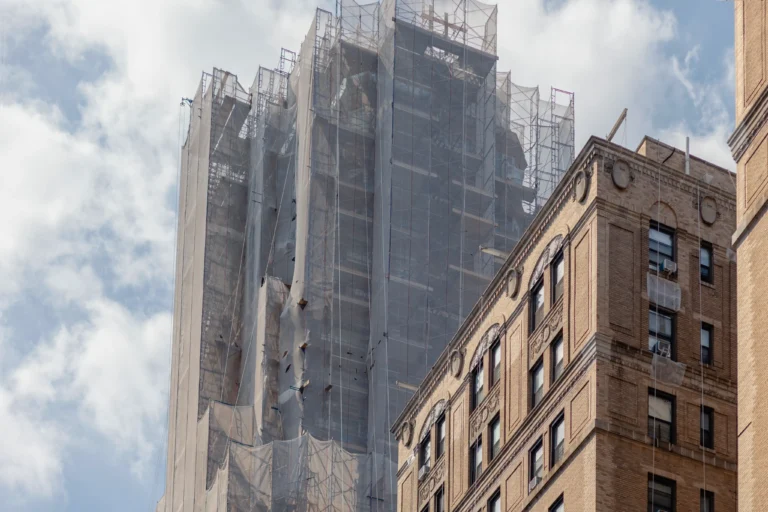
NYC's Landmark Exterior Restoration Specialists
Nova Construction Services has built its reputation on landmark-quality exterior restoration in Manhattan.
Our portfolio includes some of New York City’s most architecturally and historically significant buildings.
30+ years restoring landmark and historically significant buildings in NYC
Over 250 completed exterior restoration and preservation projects
Lucy G. Moses Preservation Award recipient — NYC's highest honor for preservation excellence
Extensive LPC approval experience: in-kind materials, custom fabrication, specialized craft trades
Trusted by top preservation architects
The Added Complexity of FISP Compliance on Landmark Buildings
All NYC buildings taller than six stories must comply with Local Law 11 / FISP on a five-year inspection cycle, including landmark-designated buildings.
For these properties, however, the compliance process involves an additional regulatory layer that most contractors are not equipped to navigate.
1. LPC Approval Is Required
Any exterior repair work on a NYC landmark (including work required by Local Law 11) must be reviewed and approved by the Landmarks Preservation Commission before construction begins. This approval process requires detailed documentation of proposed repair methods, material specifications, and samples.
Repairs must be executed in-kind: matching original materials in composition, texture, color, and profile.
2. In-Kind Materials and Custom Fabrication
Landmark buildings often feature materials that are no longer commercially available:
- specific terra cotta profiles
- custom limestone moldings
- period-accurate cast iron
- hand-laid masonry patterns
- historically formulated mortar
Nova’s team has the experience and trade connections to source, match, or fabricate replacement materials that meet LPC requirements.
3. No Shortcuts and No Surprises
Work on landmark buildings that proceeds without LPC approval can result in stop-work orders, mandatory reversals, and costly remediation.
Nova ensures that all required approvals are secured before mobilization and that all work is executed in strict compliance with LPC standards.
Nova Construction Services performs exterior façade repairs and restoration work. We do not provide inspections or advise on inspection findings. The QEWI determines required repairs; Nova executes them in compliance with DOB and LPC requirements.
What Nova Does for Landmark Buildings Under Local Law 11
Nova’s exterior repair scope for landmark buildings covers all conditions identified in Local Law 11 inspection reports, executed in compliance with LPC standards:
- Masonry restoration and period-accurate brick repointing with historically matched mortar
- Custom terra cotta repair and in-kind replacement (including glazed and decorative units)
- Limestone, brownstone, granite, and bluestone repair and reconstruction
- Ornamental metalwork restoration: cornices, railings, cast iron elements, fire escapes
- Copper roof, skylight, and flashing repair and replacement
- Parapet and balustrade reconstruction in original materials
- Window and sill restoration
- Stucco and plaster repair
- Façade and stone cleaning using approved methods
- Sidewalk sheds and scaffolding designed for landmark building access constraints
- LPC application coordination and pre-approval documentation support
- DOB permit acquisition and construction documentation
Nova's Process for Local Law 11 Compliance on Landmark Buildings
-
1
Step 1 — Scope Review and LPC Coordination Planning
We review your inspection report with your owner representative, property manager, and project architect. For landmark buildings, we identify which repairs will require LPC pre-approval and develop the documentation strategy and timeline accordingly.
-
2
Step 2 — Material Assessment and Custom Sourcing
Our team assesses required replacement materials against LPC standards. Where standard commercial materials are not appropriate, we identify custom fabrication sources, perform mortar and stone analysis, and develop material samples for LPC review.
-
3
Step 3 — LPC Application Support & Permitting
Working in coordination with your preservation architect, Nova prepares and submits required documentation to the LPC. We pull all required DOB permits once approvals are in hand. No work begins until all regulatory clearances are in place.
-
4
Step 4 — Expert Repair Execution
Our experienced field crews execute all required repairs using approved materials and methods. Full-time supervision ensures that craft standards are maintained throughout the project.
-
5
Step 5 — Final Sign-Off and Documentation
Upon completion, we coordinate with your QEWI, preservation architect, and the DOB to complete all required documentation for cycle closeout. LPC inspection and approval of completed work is supported as needed.
Why Timing Is Critical for Landmark Buildings Under Local Law 11
Local Law 11 cycle deadlines are fixed. For landmark buildings, however, the path to compliance is longer — because LPC approval must be secured before construction begins. This means that landmark building owners must start the planning process earlier than owners of non-designated buildings.
- LPC review timelines vary: routine approvals can take weeks; complex projects may require multiple submissions or hearings
- DOB permits cannot be pulled until LPC approval is in hand
- Unsafe conditions still require immediate public protection but repair work itself requires LPC clearance
- SWARMP conditions must be resolved before the next filing deadline, regardless of LPC process timing
Nova strongly recommends that owners of landmark buildings begin conversations with their contractor and preservation architect well before their FISP cycle inspection. This allows sufficient time for LPC approvals, custom material procurement, and mobilization without emergency pressure.
Why Owners of NYC Landmark Buildings Choose Nova
- 30 years of hands-on experience on Manhattan's landmark-designated buildings
- Lucy G. Moses Preservation Award — the highest recognition for preservation excellence in NYC
- Deep LPC process knowledge: what approvals require, how to prepare documentation, how to avoid delays
- Established relationships with NYC's leading preservation architects and engineers
- In-house expertise in custom material sourcing, mortar analysis, and historic fabrication
- End-to-end service: from LPC application support through DOB closeout
- A track record that speaks for itself: The Dakota, Terminal Warehouse, St. Paul's Chapel, The Dorilton, and dozens more
Frequently Asked Questions: Local Law 11 for NYC Landmark Buildings
Yes. Landmark designation does not exempt a building from Local Law 11 / FISP requirements. All NYC buildings taller than six stories must comply with FISP on the standard five-year cycle.
In most cases, yes. Exterior repair work on a NYC landmark requires LPC review and approval before construction can begin. The type of approval required depends on the nature and scope of the work.
Unsafe conditions require immediate public protection measures (a sidewalk shed or safety netting) regardless of landmark status. The LPC has expedited review procedures for emergency conditions. Nova can assist with navigating this process.
These are separate regulatory processes. LPC approval addresses the historic appropriateness of the proposed work. DOB permits address construction safety and code compliance. Both are typically required for exterior repair work on NYC landmarks. Nova coordinates both processes in parallel.
Work on landmark buildings typically costs more than equivalent work on non-designated buildings, due to material specificity, custom fabrication, longer approval timelines, and higher craft standards. Early planning and accurate budgeting are essential. Nova provides detailed proposals based on thorough assessment of your specific building.
Expert Local Law 11 Repairs for Your Landmark Building
Landmark buildings deserve landmark-quality restoration. If your designated building is approaching a Local Law 11 filing deadline — or if you want to plan ahead — contact Nova Construction Services today! We’ll assess your building, review your inspection findings, and provide a detailed proposal that accounts for all LPC and DOB requirements.
Got a project in mind?
Let’s talk with Local Law 11 Experts about bringing your construction vision to life!
