
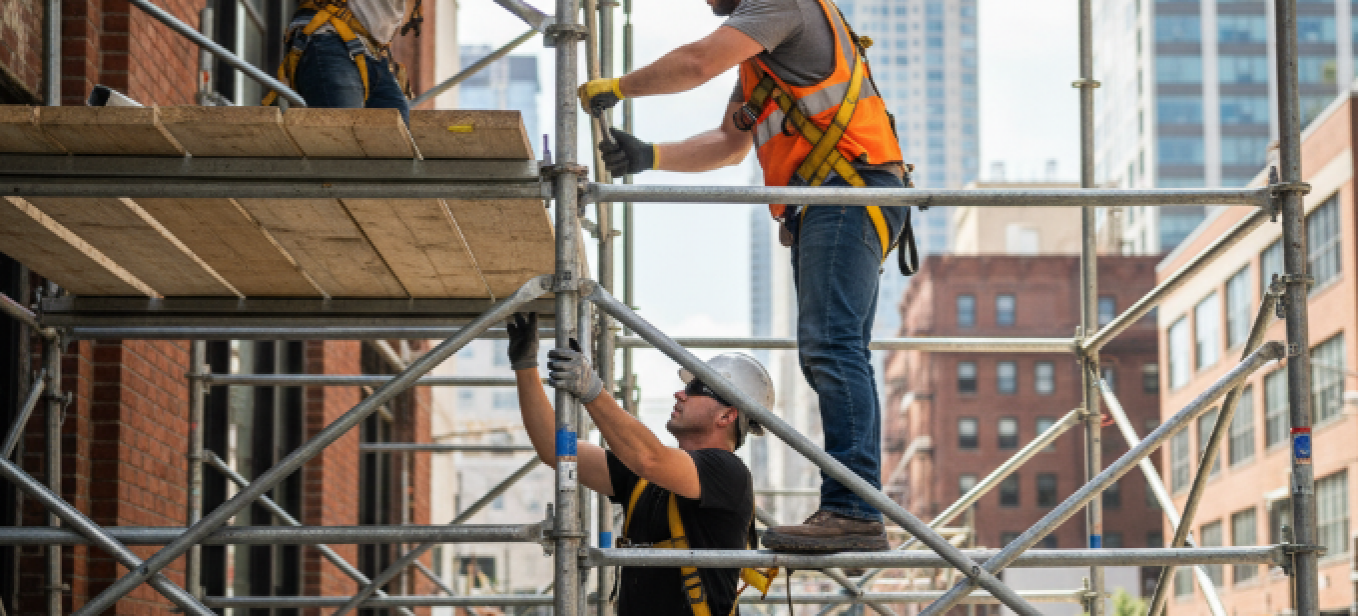
Assemble Scaffolding: Step-by-Step Guide & Tips
- By: Nova Construction Team
- Published:
- Updated: March 11, 2026
Construction and maintenance projects depend on properly assembled scaffolding to provide safe working platforms at height. Mistakes during assembly create serious hazards for workers and passersby. Scaffolding assembly requires attention to detail, knowledge of component types, and strict adherence to safety procedures. Whether erecting a simple scaffold tower or complex suspended systems, following proven assembly methods ensures structural stability and worker protection.
Please note that this article is for informational purposes only. Scaffolding assembly is a complex task that must be performed exclusively by trained, licensed professionals to ensure structural integrity and site safety.
Preparation Before Assembly
Site assessment comes first. Evaluate the ground conditions where the scaffold will stand. Soft soil, uneven surfaces, or sloped areas demand additional preparation before assembly begins. The foundation must support the entire loaded scaffold weight without settling or shifting. Poor ground preparation causes more scaffold failures than any other single factor.
Clear the assembly area of obstacles, tools, and building materials. Workers need room to move components and verify alignment during construction. Overhead hazards like power lines require attention. OSHA mandates at least 10 feet of clearance between scaffolding and electrical hazards. Closer distances require shutting off power to the line before assembly.
Gather all required components before starting. Missing parts discovered mid-assembly waste time and create safety risks if workers improvise solutions. Pipe scaffolding systems need frames, cross braces, platforms or planks, guardrails, base plates or wheels, couplers, pins, and locking mechanisms. Inspect every component for damage, rust, or defects before use.
Establishing a Stable Base
The base determines overall scaffold stability. Place base plates on solid, level ground as the first assembly step. Uneven surfaces require leveling jacks to stabilize the foundation and ensure vertical alignment of the structure. Base plates distribute loads across a larger area, preventing the scaffold legs from sinking into soft ground.
Mobile scaffolds need wheels or casters attached to base frames. Lock all brakes before continuing assembly. Wheels simplify repositioning but create instability if not properly secured during construction and use. Test brake function on every caster before proceeding.
A stability rule guides proper proportions. The scaffold height should not exceed four times the base length unless properly secured to the structure. Narrow bases supporting tall scaffolds become unstable and prone to tipping. Either widen the base or tie the scaffold to the building at appropriate intervals.
Assembling the First Level
Connect cross braces to the vertical frames at the base level. Each brace must lock securely using the appropriate mechanism. J-locks, C-locks, and pin connections all require complete engagement. Partially secured connections fail under load, causing catastrophic collapse.
Attach cross braces on the opposite side with the same attention to locking mechanisms. Both sides need complete bracing before installing the first platform. Some workers rush this step, creating a partially braced structure that can’t support weight safely.
Install the first platform or plank once both sides have secure bracing. The platform must seat properly on its supports without gaps or movement. Workers standing on improperly seated platforms risk falls when the platform shifts unexpectedly.
Building Additional Levels
Tower scaffolds grow vertically by adding frames and cross braces at each level. Continue the pattern established at the base, ensuring each level locks completely before adding height. The scaffold becomes increasingly unstable as height increases, making proper connection at every level critical.
Pipe scaffolding uses different techniques. Secure pipes in place with clamps or couplers. Each joint requires tight fastening. Loose connections allow movement that propagates through the structure, creating sway and instability. Tighten all fasteners to manufacturer specifications.
Check vertical alignment as the scaffold rises. Use a level to verify that the structure remains plumb. Leaning scaffolds concentrate loads unevenly and become progressively less stable with each added level. Correct alignment problems immediately rather than building on a tilted foundation.
Installing Safety Features
Guardrails prevent the most common cause of scaffold injuries, falls from platforms. Once the scaffold reaches working height, attach guardrails along all open edges. Guardrails include top rails installed 38 to 45 inches above the platform, mid-rails at approximately half that height, and toe boards to prevent tools and materials from sliding off edges.
Toe boards serve dual purposes. They stop objects from falling off platforms onto workers or pedestrians below. They also prevent tools from rolling under guardrails. Many jurisdictions require 4-inch minimum toe board height.
Access systems need proper installation. Ladders, stair towers, or integrated climbing systems must meet OSHA specifications. Workers maintaining three points of contact during climbing reduces slip risks. Access points at every level allow safe movement through the scaffold structure.
Inspection Before Use
A competent person must inspect the completed scaffold before anyone uses it. This inspection verifies that all components are secure, properly aligned, and free from damage. The competent person checks locking mechanisms, bracing integrity, guardrail installation, and platform condition.
Scaffold tags communicate inspection status. Green tags indicate the structure passed inspection and is safe for use. Yellow tags show modifications were made requiring re-inspection. Red tags mean the scaffold is unsafe and must not be used. Only competent persons can authorize scaffold tags.
Document the inspection with written records including date, findings, and inspector identification. This documentation proves compliance with safety regulations and provides records if questions arise about scaffold condition.
Special Considerations for Suspended Scaffolding
Suspended scaffolding presents unique assembly challenges. The platform hangs from overhead structures using suspension ropes or cables. Anchor points must be engineered to handle the loads, including the scaffold weight, workers, tools, and materials, multiplied by a safety factor.
Suspension ropes require inspection for fraying, kinks, or damage. The rigging must keep the platform level even when loads shift. Two-point suspension systems, the most common type, need equal loading on both suspension points to prevent dangerous tilting.
Before anyone steps onto a suspended scaffold, test the suspension system. Apply test loads and verify that all components function properly. Check that lowering and raising mechanisms work smoothly without binding.
Mobile Scaffold Assembly Tips
Mobile scaffolds offer repositioning flexibility but require extra safety measures. Lock all caster brakes during assembly. The structure must remain stationary while workers add components and climb the developing scaffold.
After completing assembly, test mobility before use. Unlock brakes one at a time and verify each wheel rolls smoothly. Check brake function again by attempting to move the scaffold with brakes engaged. Faulty brakes turn mobile scaffolds into dangerous unpredictable structures.
Never move mobile scaffolds with workers on them unless specifically designed for that purpose. Most mobile scaffolds require everyone to dismount before repositioning. Moving occupied scaffolds causes tip-overs and falls.
Common Assembly Mistakes to Avoid
Mixing components from different manufacturers creates compatibility problems. Scaffolding pipe sizes must match connector specifications. Forcing mismatched components together creates weak connections that fail unexpectedly.
Overloading scaffolds causes structural failure. OSHA requires scaffolds to support four times the maximum intended load without failure. This safety factor accounts for dynamic loads, uneven weight distribution, and material degradation. Exceeding load limits puts workers at extreme risk.
Incomplete bracing weakens the entire structure. Every level needs both horizontal and diagonal bracing. Skipping bracing to save time or materials creates an unsafe scaffold that will fail under load or from lateral forces like wind.
Weather Considerations
Weather affects scaffold safety. High winds create lateral forces that can topple poorly braced scaffolds. Many projects require suspending work when wind speeds exceed certain thresholds. Consult manufacturer specifications and local regulations for wind limitations.
Rain, ice, and snow make platforms slippery. Clear platforms before use and consider non-slip surface treatments. Extreme weather may necessitate postponing scaffold assembly until conditions improve. Rushing assembly in poor weather increases both construction errors and injury risks.
How Nova Construction Can Help You
Nova Construction Services employs trained scaffold erectors who understand proper assembly procedures for all scaffold types. Projects requiring sidewalk sheds or complex access systems receive professional installation that meets all safety standards.
The company maintains quality scaffold components in its inventory. All materials undergo inspection before deployment to job sites. This quality control prevents assembly problems caused by damaged or defective components reaching workers.
Scaffold design services ensure that structures meet project requirements while maintaining appropriate safety margins. Engineers calculate loads, specify bracing intervals, and determine tie-in requirements based on building conditions and work scope.
Notably, the majority of our supported scaffolding is engineered for installation over sidewalk sheds, ensuring both worker efficiency and pedestrian protection. This professional design prevents the guesswork that leads to unsafe scaffold configurations.
Training programs help building maintenance teams understand scaffold safety even when not performing assembly themselves. Recognizing unsafe scaffolds protects workers from using structures assembled by others without proper knowledge.
Contact Nova Construction Services to discuss scaffold requirements for your upcoming construction or facade restoration project. Professional assembly eliminates the risks associated with improper scaffold construction.
Got a project in mind?
Let’s talk with Local Law 11 Experts about bringing your construction vision to life!
