
Local Law 11 and Its Impact on Property Values
- By: Nova Construction Team
- Published:
- Updated: March 11, 2026
New York City’s Local Law 11 requires building owners to conduct facade inspections every five years for structures over six stories. While primarily a safety mandate, Local Law 11 compliance directly affects property values through maintenance costs, marketability, tenant satisfaction, and investor confidence. Building owners who understand these financial implications can make strategic decisions that protect and enhance their real estate investments.
The Facade Inspection Safety Program—commonly called FISP—creates ongoing obligations that influence property operations and valuations. Properties with clean inspection records and well-maintained facades command premium prices, while buildings facing compliance issues or deferred maintenance penalties see diminished values and reduced market appeal.
How Local Law 11 Inspection Requirements Work
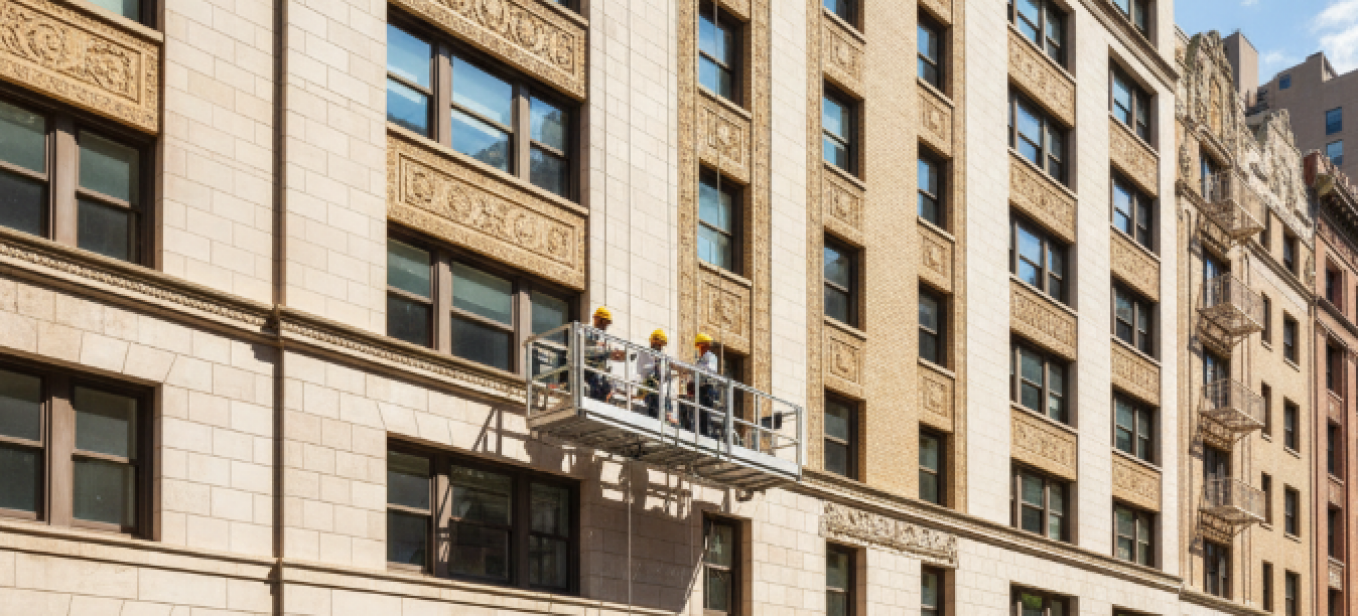
The Department of Buildings mandates that buildings over six stories undergo comprehensive exterior wall inspections by qualified inspectors every five years. A registered architect or qualified exterior wall inspector conducts a hands-on examination, accessing all facade surfaces to identify unsafe conditions, cracks, deteriorated masonry, loose elements, and structural deficiencies.
Inspection results fall into several categories. A “Safe” designation means no repairs are needed. “Safe with a Repair and Maintenance Program” or SWARMP indicates minor issues requiring monitoring but not immediate repair. An “Unsafe” rating triggers strict timelines—building owners must install protective measures like sidewalk sheds within 24 hours and begin repairs promptly.
The DOB tracks compliance meticulously. Missing filing deadlines or ignoring unsafe conditions results in penalties escalating from thousands to tens of thousands of dollars. Properties carrying violations appear in public databases, signaling to prospective buyers, lenders, and tenants that the building has outstanding issues.
Direct Cost Impacts on Property Value
Local Law 11 compliance costs vary dramatically based on building condition, height, architectural complexity, and findings from inspections. A building receiving a Safe rating might spend $15,000-30,000 on the inspection itself with no additional costs. Properties requiring repairs face expenses ranging from modest pointing and cleaning to major facade reconstruction costing hundreds of thousands or millions of dollars.
These repair costs directly reduce property values when buildings change hands. Buyers and their due diligence teams scrutinize inspection reports and outstanding violations. Properties with known facade issues sell at discounts reflecting estimated repair costs plus additional margins for risk and disruption. Even completed repairs affect valuations if recent capital expenditures depleted reserves or increased assessment obligations for condominium or cooperative buildings.
Scaffolding and sidewalk shed requirements compound financial impacts. An unsafe facade designation means installing protective structures that remain until repairs are completed and re-inspection confirms safety. These installations cost $30,000-100,000+ depending on building perimeter and duration. Occupied sidewalk sheds reduce ground-floor retail appeal, sometimes forcing rent concessions or tenant departures that further diminish property income and value.
Financing becomes complicated when Local Law 11 violations appear on title. Lenders view outstanding DOB violations as red flags indicating deferred maintenance and potential cost overruns. Some institutions refuse to lend on properties with open facade violations, while others require reserve escrows or discounted loan-to-value ratios. This financing friction reduces buyer pools and forces sellers to accept lower prices.
Market Perception and Buyer Confidence
Beyond direct repair costs, Local Law 11 compliance history shapes how the market perceives a property. Buildings with consistent Safe ratings and documented maintenance records signal professional management and quality construction. Investors recognize that well-maintained facades reduce future capital needs and tenant disruptions, making these properties more attractive investments.
Conversely, buildings with histories of unsafe ratings, late filings, or recurring violations raise concerns about overall property condition and management competence. Buyers wonder what other deferred maintenance lurks behind facades—aging mechanical systems, deteriorating roofs, outdated life safety equipment. The facade becomes a proxy for building quality, influencing valuations beyond actual repair requirements.
Properties approaching their five-year inspection cycle face valuation uncertainty. Sellers with inspections due within 18 months often complete the process before marketing, using positive results to strengthen asking prices or address findings to remove transaction obstacles. Buyers acquiring properties near inspection deadlines negotiate price adjustments or seller repair credits to account for unknown facade conditions.
Tenant Relations and Rental Income
Local Law 11 compliance affects property values through tenant satisfaction and rental income stability. Tenants—whether residential, commercial, or institutional—prefer buildings with clean compliance records and minimal construction disruption. Façade inspections and repairs impact tenant experience in several ways:
- Sidewalk sheds block natural light and create less appealing entrances, frustrating residents and reducing retail foot traffic
- Scaffolding installations generate noise and limit window access during work periods
- Extended repair timelines disrupt building operations and tenant routines
- Visual appearance of construction signals instability and deters prospective tenants
These disruptions translate to economic consequences. Residential buildings with prolonged scaffolding see increased turnover as tenants leave upon lease expiration. Commercial tenants sometimes negotiate rent reductions when facade work impacts their operations or customer access. Properties struggling to maintain occupancy due to ongoing construction face lower net operating income, directly reducing valuations based on income capitalization approaches.
Proactive building owners minimize these impacts by planning facade work strategically. Scheduling repairs during seasonal lows, communicating transparently with tenants, and completing work efficiently reduces disruption costs. Well-managed facade projects become selling points—demonstrating responsible stewardship that maintains property value rather than liabilities that erode it.
Insurance and Liability Considerations
Facade safety connects to property insurance and liability exposure in ways that affect valuations. Properties with documented unsafe conditions face potential premium increases or coverage limitations if incidents occur. Some insurers request facade inspection reports during underwriting, using compliance status to assess risk.
Liability from falling facade debris creates catastrophic exposure for building owners. Even with insurance, claims from injuries or property damage harm reputations and signal management failures to the market. Properties with histories of facade incidents or near-misses face stigma that persists long after repairs, suppressing values compared to comparable buildings with clean safety records.
The mandate itself provides some protection—building owners following Local Law 11 inspection schedules and addressing identified issues demonstrate due diligence that defends against negligence claims. This compliance creates value by reducing liability risk that buyers and lenders factor into acquisition decisions.
Long-Term Investment Strategy
Sophisticated property owners view Local Law 11 not as a burden but as a framework for strategic capital planning. Rather than reacting to inspection findings every five years, proactive maintenance programs address facade issues before they become urgent. This approach:
- Reduces total lifecycle costs by catching problems early when repairs are simpler
- Eliminates emergency repair premiums and sidewalk shed requirements
- Maintains property appearance and marketability continuously
- Demonstrates management quality that attracts premium buyers and tenants
Properties with documented preventive maintenance programs and clean Local Law 11 histories command valuation premiums in competitive markets. Institutional buyers particularly favor buildings with professional engineering assessments, planned capital reserves, and proactive facade care that reduces future capital needs.
How Nova Construction Can Help You
Nova Construction Services helps building owners navigate Local Law 11 requirements while protecting and enhancing property values. From initial facade assessments through repair completion and DOB filing, integrated services streamline compliance and minimize disruption to building operations.
Early assessment identifies facade issues before mandatory inspections, allowing strategic repair planning that avoids emergency conditions and sidewalk shed requirements. Whether addressing masonry restoration needs, Local Law 11 repairs, or comprehensive facade and stone cleaning, experienced crews complete work efficiently to restore property appearance and compliance status.
For building owners planning property sales or refinancing, Nova Construction provides pre-transaction facade assessments that identify and resolve issues before they become deal obstacles. This proactive approach maximizes property values by presenting clean compliance records to buyers and lenders.
Contact Nova Construction Services to discuss how strategic facade maintenance protects your real estate investment value!
Got a project in mind?
Let’s talk with Local Law 11 Experts about bringing your construction vision to life!
