
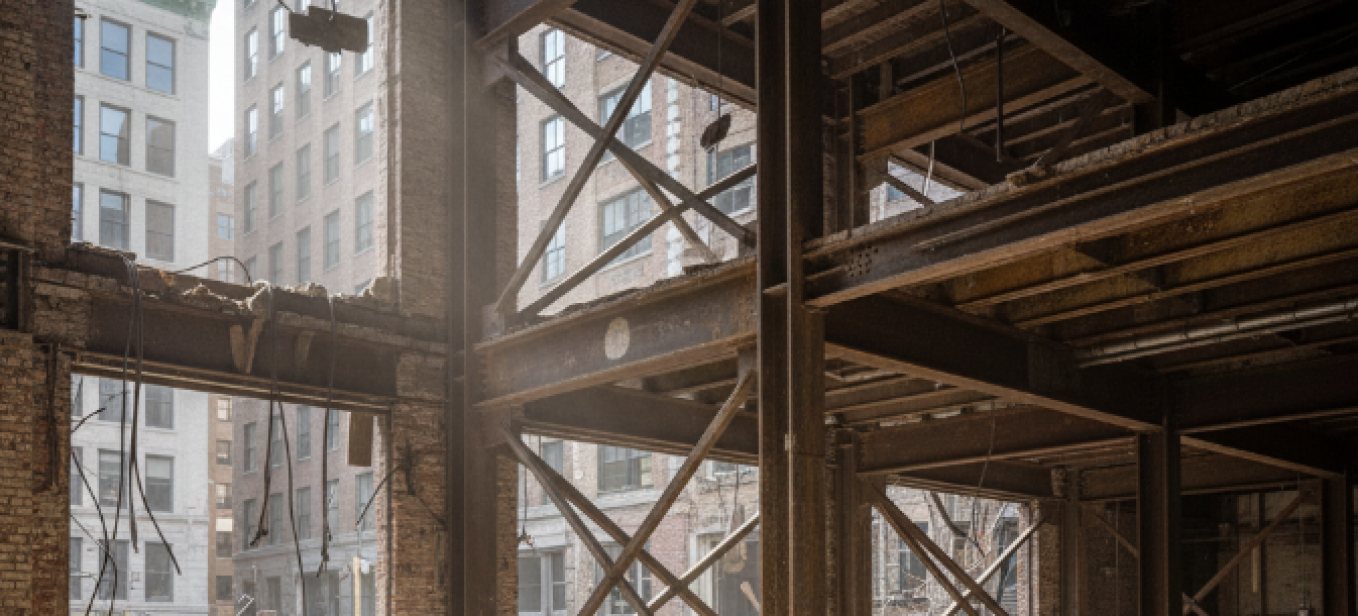
What is Structural Shoring and Why is it Important to Selective Demolition
- By: Nova Construction Team
- Published:
- Updated: March 11, 2026
Selective demolition projects require removing specific building sections while keeping adjacent structures intact and stable. Structural shoring systems make this possible by providing temporary support that prevents collapse during controlled deconstruction. Without proper shoring, even minor demolition work can compromise building integrity and create dangerous conditions for workers and neighboring properties.
Building owners undertaking partial demolitions, renovations involving load-bearing wall removal, or excavation near existing foundations must understand how shoring protects both people and property. The technique has evolved from simple timber props to engineered systems using steel beams, hydraulic jacks, and precisely calculated load transfers.
Understanding Structural Shoring Basics
Shoring involves installing temporary structural support to bear loads that existing building elements normally carry. When demolition crews remove walls, columns, or floor sections, those elements can no longer support the weight above them. Shore systems transfer these loads to stable points—either the ground, remaining structural members, or temporary support assemblies.
The complexity of shoring that is used varies dramatically based on project scope. A simple interior wall removal might need only a few adjustable steel posts, while demolishing several floors of a high-rise requires extensive engineered shoring with multiple load paths and redundant safety factors.
Proper shoring design starts with structural analysis. Engineers calculate existing loads, determine which elements will be removed, and design temporary support systems capable of handling transferred weight plus dynamic loads from demolition activities. This analysis accounts for material properties, connection details, and potential load combinations that could occur during different demolition phases.
Primary Types of Shoring Systems
Different structural situations call for specific shoring approaches. Selective demolition contractors choose systems based on space constraints, load requirements, and duration of support needed.
Raking Shore Systems
A raking shore consists of inclined beams that brace a wall from the outside, transferring lateral loads to the ground. The rake angles from the wall base to a point higher up the facade, preventing the wall from tilting or collapsing inward during adjacent demolition work. Multiple raking shores can be installed along a wall length to distribute support.
These systems work particularly well when interior access is limited or when demolition activities would make interior shoring impractical. The shore must be founded on solid ground or a prepared base capable of resisting both vertical and horizontal thrust forces. Adjustable connections at the wall allow fine-tuning to achieve proper compression in the shore members.
Raking shore installations often appear during facade restorations where interior floors are being removed but exterior walls must remain standing. The temporary bracing holds walls plumb until permanent structural elements can be reconstructed.
Flying Shoring
Flying shoring bridges between two parallel walls without touching the ground, providing mutual support when a building between them is being demolished. Horizontal beam members span from wall to wall, with angled struts creating a truss-like assembly that keeps both walls vertical and prevents collapse toward the void.
This type of shoring proves essential in urban demolition where buildings share party walls with occupied adjacent structures. Rather than relying on the demolished building for support, flying shoring lets each wall brace the other, maintaining stability throughout the demolition process.
Vertical Shoring (Dead Shores)
Vertical shoring uses posts, columns, or adjustable steel shores to support beams or floor structures directly from below. When contractors remove load-bearing walls or columns during selective demolition, vertical shores placed on either side of the removal zone carry the loads until permanent supports are installed.
The ground or floor supporting vertical shores must have adequate bearing capacity. In some cases, steel plates spread loads across larger areas to prevent punching through slabs or crushing weak soil. Beam members spanning between vertical shores distribute loads from above, creating stable load paths that bypass demolished sections.
Projects involving structural shoring often combine vertical systems with horizontal bracing to handle both gravity loads and lateral forces from wind or demolition impacts.
Safety and Engineering Considerations
Shoring failures cause serious injuries and fatalities every year. Proper design, installation, and inspection are non-negotiable for safe selective demolition. Engineers must consider dynamic loads from equipment, material storage on partially demolished floors, and potential impact from falling debris.
Installation sequences matter critically. Shores must be placed and tensioned in specific orders to avoid creating temporary instability. As demolition progresses, shoring loads may change, requiring adjustment or additional support. Daily inspections verify that:
- Shore members show no signs of crushing, buckling, or distortion
- Connections remain tight and properly aligned
- Bearing surfaces haven’t settled or shifted
- No unauthorized modifications have occurred
Building owners bear legal responsibility for providing safe work environments. Using unqualified contractors or skipping engineered shoring plans creates enormous liability exposure. Even projects that seem straightforward can involve hidden structural complexities that only trained professionals can identify.
Weather affects shoring performance, particularly for excavation systems. Rainfall saturates soil, increasing pressure on retaining walls and potentially causing bearing capacity failures under shore posts. Freeze-thaw cycles can disrupt soil around foundations. Monitoring and adaptation keep systems safe through changing conditions.
How Nova Construction Can Help You
Nova Construction Services engineers shoring systems for selective demolition projects throughout the New York area. Every project begins with thorough structural assessment—examining existing conditions, identifying load paths, and designing temporary support systems that maintain stability while allowing efficient demolition sequences.
The company’s experience with complex urban buildings means anticipating challenges before they arise. Whether a project involves removing several floors while keeping a historic facade standing, or excavating for vault repairs and replacement near occupied basements, properly engineered shoring protects workers, adjacent properties, and the client’s investment.
From initial planning through final removal, Nova Construction coordinates shoring installation, inspection, and monitoring. This integrated approach ensures that temporary support systems remain adequate as demolition progresses and conditions change. For building owners planning selective demolition, emergency repairs, or excavation work, Nova Construction provides the engineering expertise and field experience to shore structures safely and cost-effectively. Contact Nova Construction Services to discuss shoring requirements for your next project.
Got a project in mind?
Let’s talk with Local Law 11 Experts about bringing your construction vision to life!
